
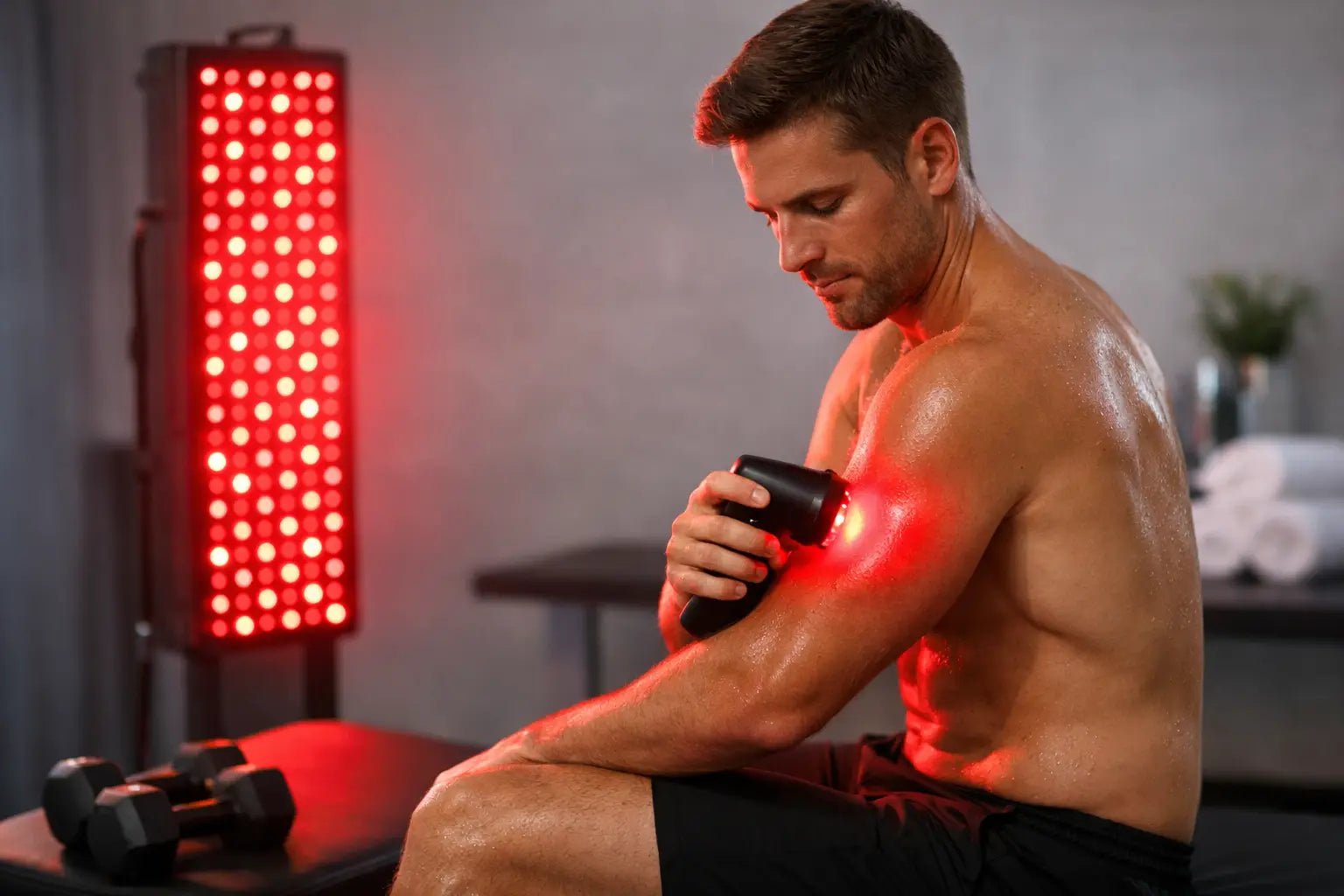
Leg day has a way of reminding you who’s in charge. When your quads feel heavy, your shoulders stay tight, or yesterday’s workout still shows up in every step, recovery stops feeling optional. That’s exactly why red light therapy muscle recovery has become such a popular part of at-home wellness routines - it offers a simple way to support your body between workouts without adding another hard task to your day.
What red light therapy muscle recovery actually means
Red light therapy uses specific wavelengths of light, usually in the red and near-infrared range, to expose tissue to low levels of light energy. The goal is not heat like a heating pad, and it is not the same thing as tanning or sun exposure. Instead, the light is used to support natural cellular activity in the areas being treated.
For muscle recovery, people usually use red light therapy on sore or overworked areas like the legs, back, shoulders, glutes, or arms. The appeal is easy to understand. If you can sit or stand in front of a device for a few minutes at home and potentially help your body feel less stiff and more ready for the next session, that fits the way most people actually want to recover.
The biggest draw is convenience. You do not need to book an appointment, rearrange your schedule, or treat recovery like a separate project. For busy adults trying to stay consistent with strength training, walking, yoga, Pilates, or home workouts, that matters.
How it may support post-workout recovery
The reason people use red light therapy after exercise comes down to a few potential benefits. First, it may support circulation in the treated area. Better blood flow can help deliver oxygen and nutrients where your body needs them after physical effort.
Second, it may help reduce the feeling of muscle soreness and tightness. That does not mean it erases every hard workout or replaces rest days. It means some users find they feel less beat up afterward, which can make it easier to stay active consistently.
There is also interest in how red and near-infrared light may support cellular energy production. You do not need a deep science lesson to care about that. In practical terms, the appeal is simple: if your cells can do their repair work more efficiently, recovery may feel smoother.
That said, results are not identical for everyone. Your training intensity, sleep, hydration, stress levels, nutrition, and the quality of the device all play a role. Red light therapy can be a useful tool, but it works best as part of a bigger recovery routine, not as a shortcut around the basics.
What it can help with - and what it can’t
For many people, the most realistic use case is general soreness, stiffness, and recovery support after exercise. If your muscles feel tight after lifting, your hips stay cranky after a long run, or your upper back gets tense after Pilates and desk time, red light therapy may be worth adding to your routine.
It can also be appealing if you want a recovery option that feels calm and low effort. Ice baths, foam rolling, massage guns, stretching, and mobility work all have their place, but not everyone wants every recovery session to feel intense. Light therapy offers a more passive option.
What it cannot do is replace medical care for injuries. A pulled muscle, a sharp pain that changes your movement, major swelling, or pain that keeps getting worse needs proper evaluation. It also should not be treated like magic. If you are under-sleeping, overtraining, and skipping recovery days, no device is going to fully compensate for that.
Why at-home devices are getting so popular
A big reason red light therapy has moved beyond spas and specialty clinics is that people want wellness tools they can actually use consistently. The best recovery products are not always the most complicated ones. They are the ones that fit into real life.
An at-home red light device can work well before a shower, after a workout, while you wind down at night, or even as part of your morning routine. That flexibility matters for anyone trying to build habits that last. It also makes the value easier to see. You are not paying for one treatment. You are creating access to a recovery tool you can return to again and again.
For a lifestyle-focused wellness brand like Best Fit & Healthy, that approach makes sense. Recovery should feel like something you can build into daily life, not something you only think about when you are already exhausted.
How to use red light therapy for muscle recovery
The best routine is the one you will actually stick with. Most people use red light therapy for several minutes per area, a few times per week or even daily depending on the device instructions and their training schedule. Larger panels are useful if you want to cover bigger areas like quads, hamstrings, or the full back. Smaller targeted devices can make sense for shoulders, elbows, knees, or calves.
Timing depends on your goal. Some people like to use it after workouts to support recovery when soreness is starting to build. Others use it on rest days when tightness tends to peak. It can also fit well into a broader self-care routine alongside stretching, hydration, protein intake, and sleep.
Consistency matters more than overdoing it. Longer sessions are not always better, and random use tends to be less helpful than regular use. Follow the device guidance, pay attention to how your body responds, and give it enough time to judge whether it is helping.
Best areas to target
If your goal is muscle recovery, focus on the areas that take the most stress from your routine. For strength training, that may be the chest, shoulders, glutes, and legs. For runners, calves, hamstrings, quads, and hips often make the most sense. For people doing yoga, Pilates, or long hours at a desk, the low back, neck, and upper back may be the spots that need the most support.
What to expect
Some users notice a difference in how tight or sore they feel fairly quickly, while others need a few weeks of regular use to decide. This is one of those wellness tools where subtle improvement can still be meaningful. Feeling a little looser, moving with less stiffness, or bouncing back better after training can be enough to make your overall routine feel stronger.
Is red light therapy worth it for active adults?
If you are looking for a recovery tool that is easy to use, non-invasive, and simple to keep at home, it can absolutely be worth considering. It fits especially well for people who already care about movement, consistency, and building a wellness routine that supports both performance and everyday comfort.
It may be a great match if you want help with soreness management, if you prefer recovery tools that do not feel aggressive, or if you want one device that can support both fitness recovery and broader self-care habits. Many people also like that red light therapy can fit into a routine that includes skin-focused wellness, relaxation, and daily health habits rather than living in a sports-only category.
The trade-off is that you need patience and a quality device. If you want a one-time dramatic fix, this probably is not the right expectation. If you want a practical tool that supports a more consistent recovery lifestyle, that is where it starts to make sense.
Building a smarter recovery routine
Red light therapy works best when it supports the basics, not when it replaces them. Great recovery still comes back to enough sleep, smart programming, protein, hydration, and rest between hard sessions. If those pieces are in place, adding a light therapy device can be a strong next step.
Think of it as part of your home wellness setup, right alongside mobility work, supportive fitness accessories, and other tools that help you move better and feel better. That is where the value really shows up - not in a perfect biohacking fantasy, but in a routine that feels realistic enough to keep.
If your workouts matter to you, your recovery deserves the same attention. A few intentional minutes can go a long way when they help you show up less sore, more mobile, and more ready for whatever tomorrow’s session brings.
Share:
How to Use Red Light Therapy at Home
Best Facial Skin Rejuvenation Device Guide