
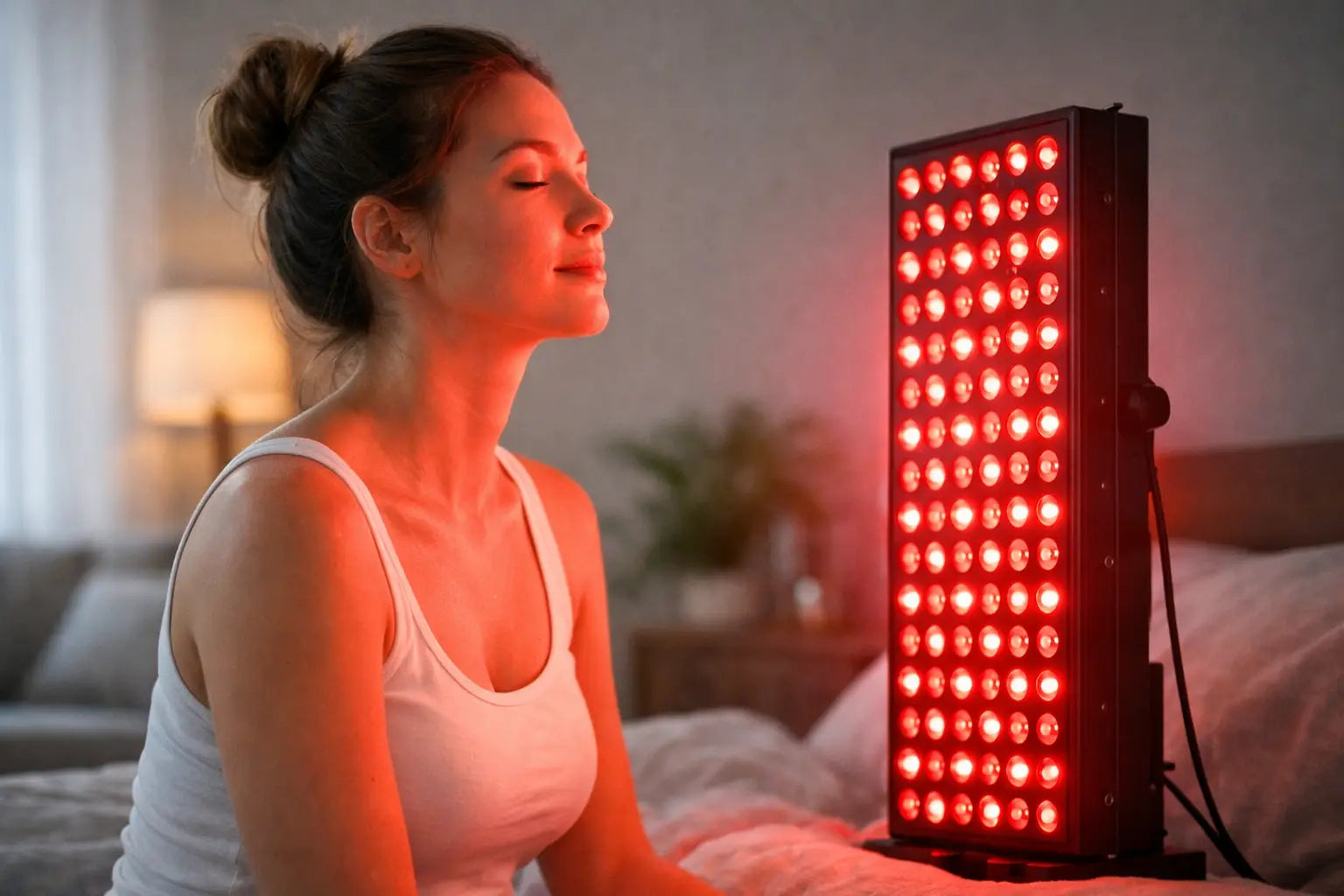
A good red light therapy routine should feel easy enough to repeat - not like another wellness task that gets pushed to the weekend. If you're wondering how to use red light therapy at home, the goal is simple: choose the right device, use it consistently, and match your sessions to what you want most, whether that's muscle recovery, clearer-looking skin, or a calmer daily reset.
Why red light therapy works so well at home
Red light therapy fits naturally into real life because it doesn't ask for much. You don't need a spa appointment, a long recovery window, or a complicated setup. A few focused sessions each week can slide into the same routine you already use for workouts, skincare, stretching, or evening wind-down time.
That's a big reason at-home devices have become part of so many wellness routines. They give you more control over consistency, and consistency is where most people start to notice value. A single session can feel relaxing, but the bigger payoff usually comes from regular use over time.
At home, people usually turn to red light therapy for two broad reasons. One is performance and recovery - helping support muscles, movement, and post-workout routines. The other is beauty and self-care - using light as part of a skin-focused routine to support a healthy-looking glow and a more polished daily ritual.
How to use red light therapy at home without overthinking it
The best place to start is with one target area and one routine. That's it. If you try to treat your whole body, your face, your neck, your shoulders, and your legs from day one, it's easy to lose momentum.
Pick your main goal first. If your priority is recovery, you might use your device after training on quads, hamstrings, calves, shoulders, or lower back. If your focus is skincare, you might use it on the face and neck as part of your morning or evening routine. If you want general wellness support, attach it to an existing habit like post-shower stretching or before-bed downtime.
Most people do well with short sessions several times per week. Depending on the device, that often means somewhere around 10 to 20 minutes per treatment area. The exact timing can vary by power, design, and how close the device is to your body, so the manufacturer instructions matter. More time is not always better. Going far beyond the suggested session length doesn't usually create faster results, and it can make a simple routine feel harder to maintain.
Distance matters too. Some devices are meant to sit quite close to the skin, while others are designed to be used a bit farther away. If you're too far from the light, you may not get the intended intensity. If you're much closer than recommended, you may make the session less comfortable than it needs to be. Follow the specific guidance for your device and keep your setup repeatable.
Choosing the right device for your routine
This is where lifestyle matters more than people expect. The best device is not always the biggest or most expensive one. It's the one you'll actually use.
If you're focused on facial skincare, a mask or smaller face-centered device usually makes more sense than a large panel. It's easier to store, quicker to use, and more likely to become part of a routine you already have. If your main priority is recovery after strength training, running, yoga, or Pilates, a panel or larger targeted device may be a better fit because it can cover bigger areas more efficiently.
Portability can matter just as much as power. Some people want a device that stays in one recovery corner of the house. Others need something easy to move from bedroom to bathroom to workout space. If convenience is your bottleneck, choose for convenience.
At Best Fit & Healthy, the appeal of at-home wellness tools is exactly that - they help you build a routine that supports recovery, movement, beauty, and daily health without adding friction.
Setting up your session the right way
Before each session, start with clean, dry skin on the area you're treating. If you're using red light therapy for skincare, remove makeup and heavy products first unless your device instructions say otherwise. If you're using it for recovery, make sure clothing isn't blocking the area you want to target.
Then get comfortable. Sit, stand, or recline in a position you can hold without fidgeting through the entire session. Red light therapy works best when it feels easy to stick with, so your setup should be simple enough to repeat half-asleep in the morning or after a long day.
Eye guidance depends on the device and treatment area. Some face devices are designed with eye use in mind, while stronger panels may recommend eye protection or avoiding direct staring into the light. This is another place where device-specific instructions matter more than guesswork.
A timer helps. Even if your device includes one, it's smart to build the habit of knowing when your session starts and ends. That keeps your routine consistent and helps you notice what schedule feels best for your body and goals.
Using red light therapy for skin goals
If your interest is mostly skin-focused, think of red light therapy as part of a routine, not a replacement for one. Cleanser, moisturizer, daily sunscreen, and healthy habits still matter. The light works best as a supportive step inside a bigger self-care rhythm.
For facial use, consistency usually beats intensity. A short session several times a week tends to be more practical than occasional marathon sessions. If your skin is sensitive, start on the lower end of the recommended schedule and give your skin time to adjust. Some people like using red light therapy in the morning for a fresh, polished routine, while others prefer evening because it feels calmer and easier to stick to.
Results are rarely instant. You may notice the experience feels soothing right away, but visible skin-related changes usually take time and regular use. That can be frustrating if you're used to products that promise overnight transformation, but steady habits are often what make beauty tools worth keeping.
Using red light therapy for recovery and movement
For workout recovery, timing depends on your routine. Some people use red light therapy before training as part of a warm-up mindset, while others prefer it after exercise to support recovery and relaxation. Neither approach is universally best. It depends on whether you're trying to feel ready to move or helping your body settle down afterward.
Larger muscle groups are often the most practical place to start. Legs after lower-body training, shoulders after upper-body work, or the lower back after long desk days and tough sessions are common choices. If you train often, rotating treatment areas across the week can make the routine feel more manageable.
This is also where expectations matter. Red light therapy can be a strong addition to a recovery routine, but it works best alongside basics that still count - sleep, hydration, mobility work, smart programming, and enough rest between hard efforts. It's a support tool, not a shortcut.
Common mistakes that make home use less effective
The biggest mistake is inconsistency. People often use a device three days in a row, forget about it for two weeks, then decide it doesn't work. Most wellness tools need repetition before they become rewarding.
The second mistake is choosing too many goals at once. If you start with one clear objective, it's easier to build the habit and judge whether the routine is helping. The third is ignoring the instructions because every red light therapy device is a little different. Session length, distance, and frequency should come from the design of the device you're using, not a random rule from somewhere else.
Another common issue is expecting red light therapy to fix problems caused by an overloaded routine. If your body is asking for less stress, more sleep, or better recovery habits, light therapy can help support you, but it can't carry the whole job alone.
How often should you use red light therapy at home?
For most people, the sweet spot is regular use without turning it into a chore. That often means a few sessions per week, with each session lasting only as long as your device recommends. If you're brand new, start conservatively and build from there. That gives you a better feel for what fits your schedule and how your skin or body responds.
You also don't need to force a perfect routine. If four sessions a week is realistic and six is not, four done consistently will usually serve you better. The best home wellness habits are the ones that survive busy workdays, travel, family schedules, and low-energy evenings.
When to be cautious
If you have a medical condition, are taking medications that increase light sensitivity, or have concerns about how red light therapy fits into your care, it's smart to check with a qualified healthcare professional before starting. The same goes for anyone managing a specific skin issue or eye concern.
Even for healthy users, the basic rule is simple: use the device as directed. If your skin feels irritated, if the sessions feel too intense, or if something seems off, pause and reassess before pushing through.
A home red light therapy routine doesn't need to be complicated to be effective. Keep it consistent, keep it realistic, and let it support the version of wellness you can actually maintain - the one that helps you move better, recover faster, and feel stronger in your own space.
Share:
Red Light Therapy for Face: Is It Worth It?
Red Light Therapy Muscle Recovery Explained