
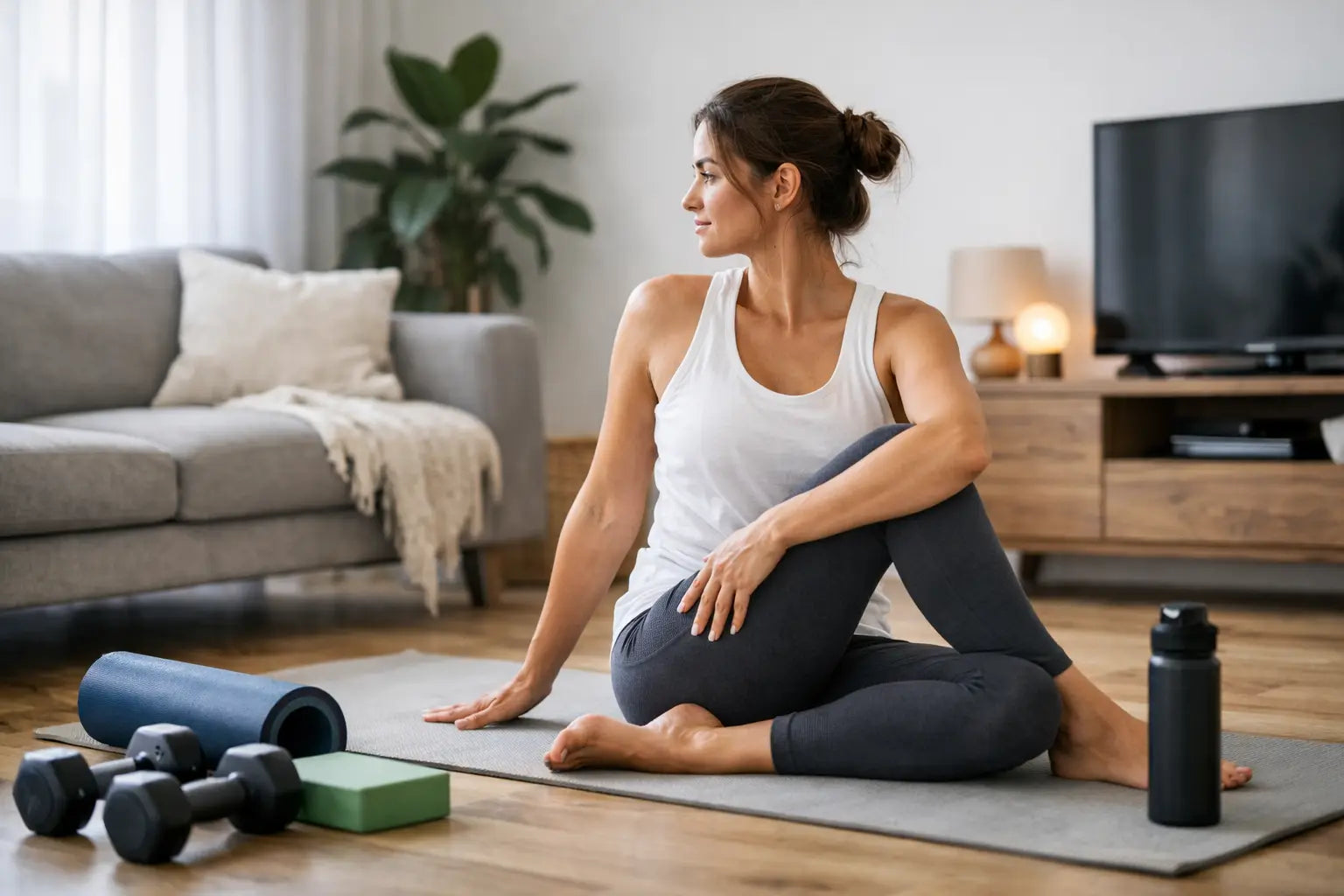
You feel it when you reach for the coffee mug on the top shelf, stand up after a long work block, or try to get into a deep squat during a workout. Stiff hips, tight shoulders, and a cranky back do not usually show up all at once. They build quietly, which is exactly why a daily mobility routine at home can make such a noticeable difference.
Mobility is not the same as flexibility. Flexibility is your ability to lengthen a muscle. Mobility is your ability to actively move a joint through a full, controlled range of motion. That distinction matters because most people do not just want to touch their toes. They want to move better during workouts, feel less tension during the day, and keep their body feeling capable as life gets busier.
The good news is that you do not need an hour, a studio class, or a complicated program. A smart routine done consistently at home often beats an ambitious plan you abandon after three days. If your goal is better posture, smoother movement, less stiffness, and easier recovery, start small and make it daily.
Why a daily mobility routine at home actually works
The biggest benefit of doing mobility work at home is that it removes friction. You are not commuting, scheduling, or waiting for motivation to appear. You can do five minutes before your shower, ten minutes after a workout, or a short session before bed.
That convenience is not just nice to have. It is what makes consistency possible. Mobility responds well to frequency. Your body tends to change more from regular low-effort practice than from one long stretching session on Sunday night.
It also fits naturally into a bigger wellness lifestyle. If you already care about recovery, posture, at-home workouts, or even how stress shows up in your face and shoulders, mobility is one of the simplest habits to add. It supports performance, helps your body feel less restricted, and can make everything from strength training to walking feel better.
There is one trade-off, though. A home routine works best for general stiffness and maintenance. If you have sharp pain, a recent injury, or major limitations in one joint, a personalized assessment matters more than another round of hip circles.
The best structure for a daily mobility routine at home
Instead of chasing random stretches from social media, think in categories. A good routine opens the joints that usually get stiff from modern life and daily training patterns. For most people, that means the spine, hips, shoulders, and ankles.
A practical daily session usually takes 8 to 15 minutes. That is enough to create change without turning your routine into another task you avoid. If you train hard, sit a lot, or wake up especially stiff, you may prefer the full 15 minutes. If your schedule is packed, even 6 to 8 focused minutes can help.
The basic flow is simple. Start with gentle movement to warm up the joints. Then move into controlled mobility drills for your main problem areas. Finish with positions that reinforce better posture and breathing.
1. Start with spinal movement
Your spine does not love being locked into one position all day. That is why a few rounds of cat-cow, thoracic rotations, or a child’s pose to upward stretch sequence can feel so effective so quickly.
This part should feel smooth, not forced. You are waking up motion, not trying to hit some dramatic end range. If your upper back is especially stiff from desk work, spend a little longer here. People often blame their shoulders for overhead tightness when the upper back is part of the problem.
2. Open the hips from more than one angle
Hips get a lot of attention, and for good reason. Sitting, driving, and even certain workout styles can leave them feeling tight in flexion, rotation, or both. A balanced mobility routine includes hip circles, 90-90 switches, and a low lunge with gentle rotation.
The key is variety. If you only stretch the front of the hip, you may miss internal and external rotation. That is where many people feel restricted during squats, lunges, and yoga flows. Controlled movement through different hip angles tends to carry over better than holding one static stretch forever.
3. Give your ankles a little attention
Ankles are easy to ignore until your heels lift in a squat or your knees and hips start compensating. A wall ankle mobilization or slow knee-over-toe ankle rocks can improve how the whole lower body moves.
This is one of those small habits with outsized payoff. Better ankle mobility can support balance, walking mechanics, squat depth, and general comfort during training. If you do Pilates, strength work, or long walks, it is worth the minute or two.
4. Restore shoulder range and posture
If you carry tension in your neck and shoulders, this section tends to feel especially good. Arm circles, thread-the-needle, and wall slides can help restore motion while encouraging better upper-body positioning.
Go slow here. Shoulder mobility is not about flinging your arms around and hoping for the best. Controlled reps help you build usable range, which is what matters when you are lifting, reaching, or trying to improve posture over time.
5. Finish with breathing and reset work
This is the part people skip, and it is often the part that makes the routine feel complete. A deep squat hold with support, a lying twist, or a simple feet-up breathing position can help your body shift out of tension mode.
Breathing matters because mobility is not purely mechanical. When you are stressed, rushed, or bracing through every rep, your body tends to hold on to tightness. A minute of slow nasal breathing can make your movement work feel more effective.
How to make your daily mobility routine at home stick
The best routine is the one that happens often enough to matter. That usually means attaching it to something you already do. Try it before your morning workout, after your evening shower, or while your coffee brews.
Keep the barrier low. You do not need perfect lighting, a huge room, or a full setup. A mat, comfortable clothing, and maybe a few simple recovery tools are enough for most people. If a yoga block, mobility strap, or foam roller helps you stay consistent, that is a smart upgrade, not an indulgence.
It also helps to stop thinking of mobility as a separate fitness category. It is part of how you recover, how you move during workouts, and how your body feels during normal life. That mindset shift makes it easier to stay committed.
What results should you expect?
You may feel looser after one session, but the real value comes from repetition. Within a couple of weeks, many people notice easier squats, less stiffness when getting out of bed, and better comfort in their shoulders, hips, or lower back.
Posture can improve too, but not in the dramatic way social media often suggests. Mobility helps you access better positions. It does not magically erase all posture habits on its own. If you spend ten hours a day slumped over a laptop, your routine needs consistency and support from better movement throughout the day.
Recovery is another big win. Mobility will not replace sleep, hydration, or smart training, but it can help you feel less beat up between workouts. For people building a complete at-home wellness routine, that is where mobility fits beautifully. It complements strength, yoga, red light recovery, and other self-care tools without demanding a lot of time.
Common mistakes that make mobility feel useless
The first is going too hard. Mobility should challenge you, but it should not feel like punishment. Forcing range usually creates guarding, not better movement.
The second is doing too much too soon. You do not need fifteen drills for each body part. A focused routine with a few moves done well will usually beat a chaotic 30-minute session.
The third is expecting the same sequence to solve every issue. If your hips are your main problem, your routine should lean into hips. If your upper back and shoulders are the obvious restriction, adjust the emphasis. It depends on how you move, train, and spend your day.
Build a routine that fits your real life
There is something powerful about knowing you can take care of your body without leaving the house. A daily mobility routine at home is not flashy, but it works because it meets you where you are. It turns movement, recovery, and self-care into something practical enough to repeat.
If you want to feel better in your workouts, stand taller at your desk, and carry less tension through the day, start with ten minutes and keep it simple. Best Fit & Healthy is built around that exact idea - giving your routine better tools so wellness fits into real life.
Your body does not need a perfect plan. It needs regular attention, a little patience, and a routine you will still be doing next month.
Share:
Best Yoga Mat for Home Workouts
9 Best Muscle Recovery Tools at Home