
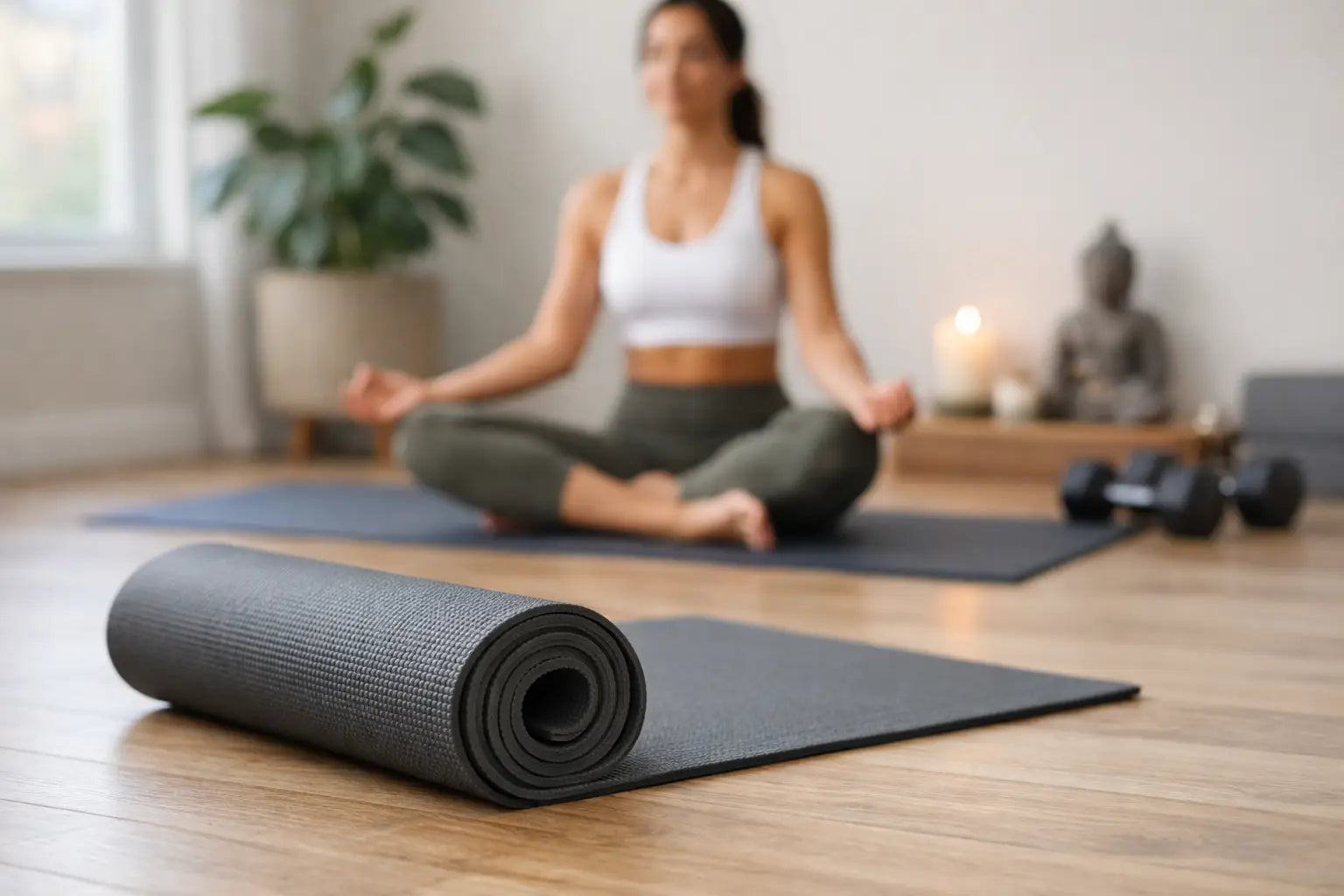
That slippery mat in the corner might be the one thing making your home workouts feel harder than they need to. If you are looking for the best yoga mat for home workouts, the right pick can change everything from your balance in Warrior II to how supported your wrists feel during planks, Pilates, and mobility work.
A good mat is not just a yoga accessory. It is part of your routine, your recovery, and your consistency. When your setup feels comfortable and stable, it is easier to show up for a quick stretch, a strength circuit, or a full-length flow without second-guessing the surface under you.
What makes the best yoga mat for home workouts?
The answer depends on how you actually move at home. Some people want extra cushioning for knees and joints. Others need a firm, grounded surface for balance poses and bodyweight strength work. If your workouts include yoga, Pilates, barre, stretching, and core training, the best mat is usually the one that gives you a mix of grip, comfort, and durability instead of being extreme in just one area.
Thickness is one of the first things to look at. A thinner mat can help you feel more connected to the floor, which is useful for balance and stability. A thicker mat tends to feel better for floor work, slower flows, and recovery sessions. The trade-off is that very soft mats can make standing poses feel less steady, especially if you are moving quickly between positions.
Grip matters just as much. At home, you may be working out on hardwood, tile, or low-pile carpet, and each surface changes how the mat performs. You want a mat that stays in place on the floor and also gives your hands and feet traction on top. If your palms tend to sweat, a mat that feels smooth in the store may not feel so reliable halfway through your workout.
Material also plays a role in comfort and maintenance. Some mats feel springy and cushioned, while others feel dense and supportive. If you use your mat often, durability matters. A mat that starts peeling, stretching, or holding odors after a few weeks will not feel like a smart addition to your wellness routine.
How to choose the right mat for your routine
The easiest way to narrow it down is to think about your most common workout, not your occasional one. If you do gentle yoga three or four times a week, your needs are different from someone doing HIIT, Pilates, and mobility sessions on the same mat.
For yoga-focused practice, a medium-thickness mat with strong grip is often the sweet spot. It gives enough cushion for seated and kneeling poses without making balance work feel unstable. If your flows are more athletic or heated, traction becomes even more important because sliding can break concentration fast.
For Pilates and floor-based training, a slightly thicker mat usually feels better. Rolling, bridging, side-lying work, and ab exercises put more pressure on hips, spine, and tailbone. More padding can make these sessions more comfortable and easier to stick with.
For mixed home workouts, versatility wins. Many people want one mat that can handle yoga in the morning, mobility work after a walk, and a short core session before dinner. In that case, look for a mat with moderate thickness, reliable grip, and enough density to support both movement and recovery.
Thickness, grip, and support without overthinking it
If you want a simple way to shop, start with three questions. Do your knees or wrists need extra support? Do you sweat during workouts? Do you mostly do standing poses or floor exercises?
If joint comfort is your top priority, choose more cushioning. If sweat is the issue, choose better traction. If your workouts include lots of balance and standing strength movements, go with a mat that feels supportive but not overly plush.
This is where many shoppers get stuck. They assume thicker always means better. It does not. Extra cushion can feel amazing during stretches, but too much softness can make lunges, single-leg work, and transitions feel a little wobbly. On the other hand, an ultra-thin mat may feel sleek and studio-like but leave your knees asking for more after ten minutes.
The best yoga mat for home workouts usually sits in that middle ground. It should feel comfortable enough for daily use and stable enough that you do not have to adjust your footing every few seconds.
Features worth paying for
Not every premium feature is necessary, but a few can make a real difference in daily use. A non-slip surface is high on the list because it affects safety, comfort, and confidence in almost every kind of session. A mat with enough weight to stay flat is also helpful, especially if you are constantly rolling it out and putting it away.
Closed-cell surfaces can be appealing if easy cleaning is a priority. They tend to resist moisture and are simpler to wipe down after a workout. If your mat lives in a bedroom, office, or living room, that matters. You want something that supports your routine without adding extra maintenance.
Another overlooked feature is how quickly the mat lays flat after unrolling. Corners that curl up can be distracting and annoying, especially in smaller spaces. A mat that feels ready when you are ready tends to get used more often.
Common mistakes when shopping for a yoga mat
One of the biggest mistakes is buying based only on appearance. A beautiful color can absolutely make your setup feel more inspiring, and that has value. But if the mat slips, sheds, or feels too thin for your body, the look will not save the experience.
Another mistake is choosing a mat designed for one very specific use when your routine is broader. A super-cushioned mat might feel great for stretching but awkward for strength work. A dense performance mat might be excellent for flows but less forgiving during longer floor sessions. If your home routine changes week to week, a balanced mat often serves you better.
Price can also be misleading. The cheapest option may need replacing quickly, while the most expensive one is not always the best fit for your needs. The better question is whether the mat supports your habits. A dependable mat that helps you move more regularly is a smarter buy than a flashy one that ends up stored away.
Creating a better home workout setup
Your mat is the foundation of your space, even if that space is just a few feet beside the bed or at the end of the couch. When the surface feels good, the barrier to starting gets lower. That matters more than people realize.
Home wellness works best when it feels easy to repeat. A quality mat supports more than exercise. It supports stretching while coffee brews, a five-minute mobility reset between meetings, or a calming evening flow before bed. That is why this choice is worth getting right.
For many people, the smartest approach is to think beyond one workout style and choose a mat that fits a real lifestyle. If your goal is to move better, recover faster, and feel stronger every day, your equipment should make that routine feel more natural, not more complicated. That is the kind of practical upgrade that fits the way Best Fit & Healthy approaches at-home wellness.
How to know you found the right one
You will know you found the right mat when you stop thinking about it during your workout. Your hands stay planted. Your knees feel supported. The mat stays put. You move through your routine with less distraction and more confidence.
That is the real standard for the best yoga mat for home workouts. Not the trendiest material or the loudest marketing claim, but the mat that helps you show up consistently and feel good doing it.
Choose the one that matches the way you move now, with enough quality to support where you want your routine to go next. The best home wellness tools are the ones that quietly make healthy habits easier every single day.
Share:
What to Wear for Pilates Class
Daily Mobility Routine at Home That Works