
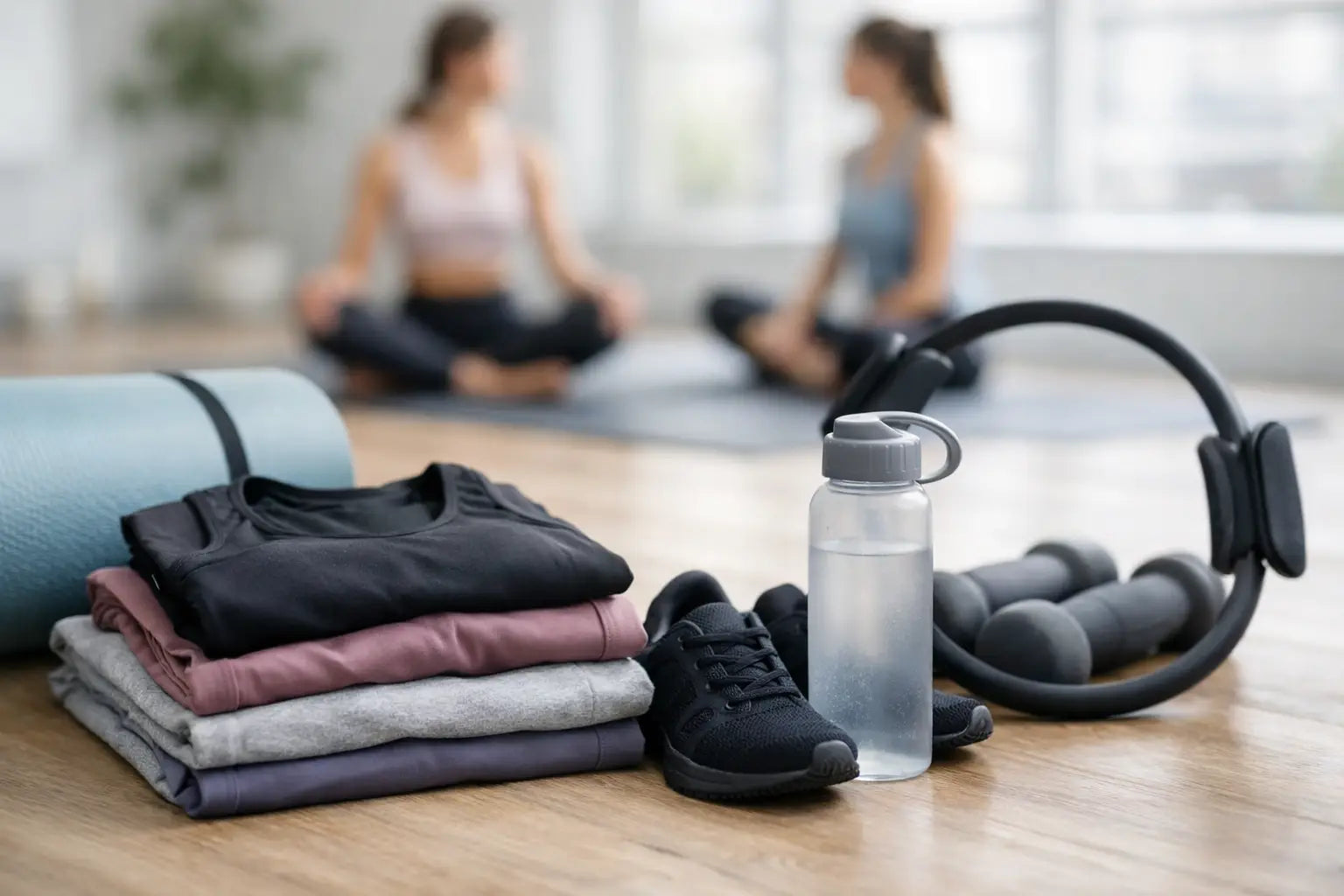
The fastest way to feel out of place in Pilates is not being new - it’s spending the whole class tugging at your shirt, slipping on the mat, or realizing your shorts are riding up every time you move into bridges. If you’ve been wondering what to wear for pilates class, the goal is simple: choose pieces that move with you, stay put, and let you focus on your body instead of your outfit.
Pilates asks for control, alignment, and concentration. Your clothing should support all three. That usually means fitted, breathable layers with enough stretch for deep core work, spinal movement, and leg exercises. You do not need a complicated studio look or expensive matching set to get it right, but you do want clothes that feel secure and comfortable from warm-up to cooldown.
What to wear for Pilates class and why fit matters
Pilates is different from a high-impact workout. You’re not dressing for speed or sweat alone. You’re dressing for precision. Instructors often need to see your alignment through your clothes, especially around the spine, hips, and knees. If your outfit is too loose, it can bunch up or make it harder to notice your form. If it’s too tight, it can restrict breathing and distract you.
That’s why fitted activewear tends to work best. Think leggings that stay in place, a supportive top, and layers you can remove once you warm up. Soft, flexible fabric matters more than flashy details. When your outfit feels almost invisible, you’ve picked well.
For many people, the best Pilates clothes are the ones that create light support without compression so intense that it feels restrictive. You want to inhale fully, roll through your spine, and move through a full range of motion. A second-skin feel is great. Being squeezed into your outfit is not.
The best tops for Pilates
A fitted tank, longline sports bra, or close-to-body tee is usually the safest choice. Tops that stay near the body make movement easier and prevent fabric from falling over your face during exercises like roll-ups, tabletop work, or inversions. They also help your instructor see your posture more clearly.
Support level depends on your body and the class style. For a gentle mat class, light to medium support is often enough. For reformer Pilates or a faster-paced session, many people prefer a more supportive sports bra under their top or as the top itself.
If you tend to get cold at the start of class, add a lightweight long-sleeve layer or a fitted zip-up. The key word is fitted. Oversized sweatshirts can feel cozy before class, but they quickly become bulky once you start moving.
A few top styles work especially well:
- Fitted tanks that won’t shift during core work
- Longline sports bras for a streamlined feel
- Short-sleeve athletic tees with stretch
- Lightweight fitted long sleeves for layering
The best bottoms to wear for Pilates class
Leggings are the go-to for a reason. They move well, offer coverage in every position, and usually stay in place better than shorts. Full-length, 7/8, or capri leggings can all work. The best choice comes down to temperature and preference.
High-waisted leggings are especially popular for Pilates because they feel secure through abdominal work and bending. A waistband that rolls down can get annoying fast, so prioritize a pair with a comfortable, stable fit.
Bike shorts can work too, especially for hot studios or home workouts. The trade-off is that some shorts ride up during leg movements, which can become distracting. If you prefer shorts, choose a longer inseam and fabric with enough hold to stay put.
Loose joggers or wide-leg pants are usually less ideal. They can bunch around the knees, shift during reformer work, or get in the way of your instructor seeing your alignment. That doesn’t mean they never work, but they’re better for lounging than for a focused Pilates session.
Do you need grip socks for Pilates?
In many studios, yes - especially for reformer Pilates. Grip socks help prevent slipping on the floor and equipment, and they add a layer of hygiene in shared spaces. Even if your studio allows bare feet, grip socks are often worth it for extra stability.
For mat Pilates at home, socks are more of a preference. Some people feel more grounded barefoot. Others like the traction and light support of grip socks. If your feet tend to slide or your floors are slick, grip socks are a smart upgrade.
Look for socks with non-slip grips across the sole and a secure fit around the heel. If they bunch inside your shoe or slide around on your foot, they won’t help much.
What to avoid wearing to Pilates class
The wrong outfit does not ruin your workout, but it can make class less comfortable than it needs to be. Extremely baggy clothes are one of the most common mistakes. They may seem relaxed, but they often shift, bunch, and hide your form.
Very short shorts can also be tricky if you spend the class adjusting them. The same goes for low-rise leggings that slip during core work. Fabrics that are stiff, itchy, or not designed for movement tend to become obvious within the first ten minutes.
You’ll also want to skip anything with bulky zippers, sharp embellishments, or oversized drawstrings if you’re using a reformer or lying on your back. Details that seem minor can dig into your skin or get in the way once class starts.
Jewelry is another area where less is better. A simple stud earring is usually fine, but chunky bracelets, long necklaces, or large rings can distract you and interfere with movement.
What to wear for Pilates class based on the format
Not every Pilates class feels the same, so your outfit can shift slightly depending on where and how you practice.
For mat Pilates, comfort and stretch matter most. A fitted tank or tee with leggings is usually enough. Since there’s often more floor work, think about how your outfit feels when you’re rolling, stretching, and lying on your back.
For reformer Pilates, grip socks move higher on the priority list. Fitted clothing also matters more because loose fabric can shift on the equipment. A secure waistband and supportive top tend to make the experience smoother.
For heated or high-intensity Pilates, lighter fabrics become more important. Moisture-wicking leggings or bike shorts and a breathable sports bra or tank can help you stay comfortable as the room warms up.
For at-home Pilates, you have more flexibility, but the same basics still apply. If your clothes let you move freely and stay focused, they’re doing their job. This is where building a small rotation of reliable activewear can make your routine easier. Brands like Best Fit & Healthy speak to that everyday wellness mindset - practical gear that fits into real life, not just studio selfies.
How to choose fabrics that actually feel good
Fabric can make or break your Pilates outfit. Look for materials with stretch, breathability, and a smooth feel against the skin. Moisture-wicking blends are helpful even in lower-sweat classes because they keep you feeling dry and comfortable.
A matte, brushed fabric often feels softer and more supportive than something overly slick or shiny. You also want enough thickness for confidence during bending and stretching. If your leggings become sheer under tension, they’re not the right pair for class.
That said, thicker is not always better. Very heavy fabrics can feel hot or restrictive. The best balance is soft, flexible, and supportive without being stiff.
Building an easy Pilates outfit you’ll actually wear
If you’re overthinking it, simplify. Start with one supportive top, one reliable pair of leggings, and grip socks. Add a light layer if your studio runs cool. That formula works for most classes and keeps the decision fatigue low.
Color and style are personal, but comfort and function should lead. If you feel confident in a matching set, wear it. If you prefer neutral basics, that works just as well. Pilates is about control and connection, not dressing for attention.
It also helps to try your outfit on before class and move in it for a minute. Reach overhead, sit into a squat, bend forward, and lie down if you can. If something pinches, slides, or shifts at home, it will probably bother you more in class.
A simple Pilates outfit formula
If you want the shortest answer to what to wear for pilates class, here it is: choose a fitted top, high-waisted leggings or longer shorts, and grip socks. Add a light layer if needed, and keep accessories minimal.
That combination works because it supports movement without distraction. It gives you coverage, comfort, and enough structure to move with confidence, whether you’re stepping into your first class or making Pilates part of your weekly wellness routine.
The best outfit is the one that helps you forget about your clothes once class begins, so you can focus on moving better, feeling stronger, and making that hour count.
Share:
Best Pilates Grip Socks for Better Practice
Best Yoga Mat for Home Workouts