
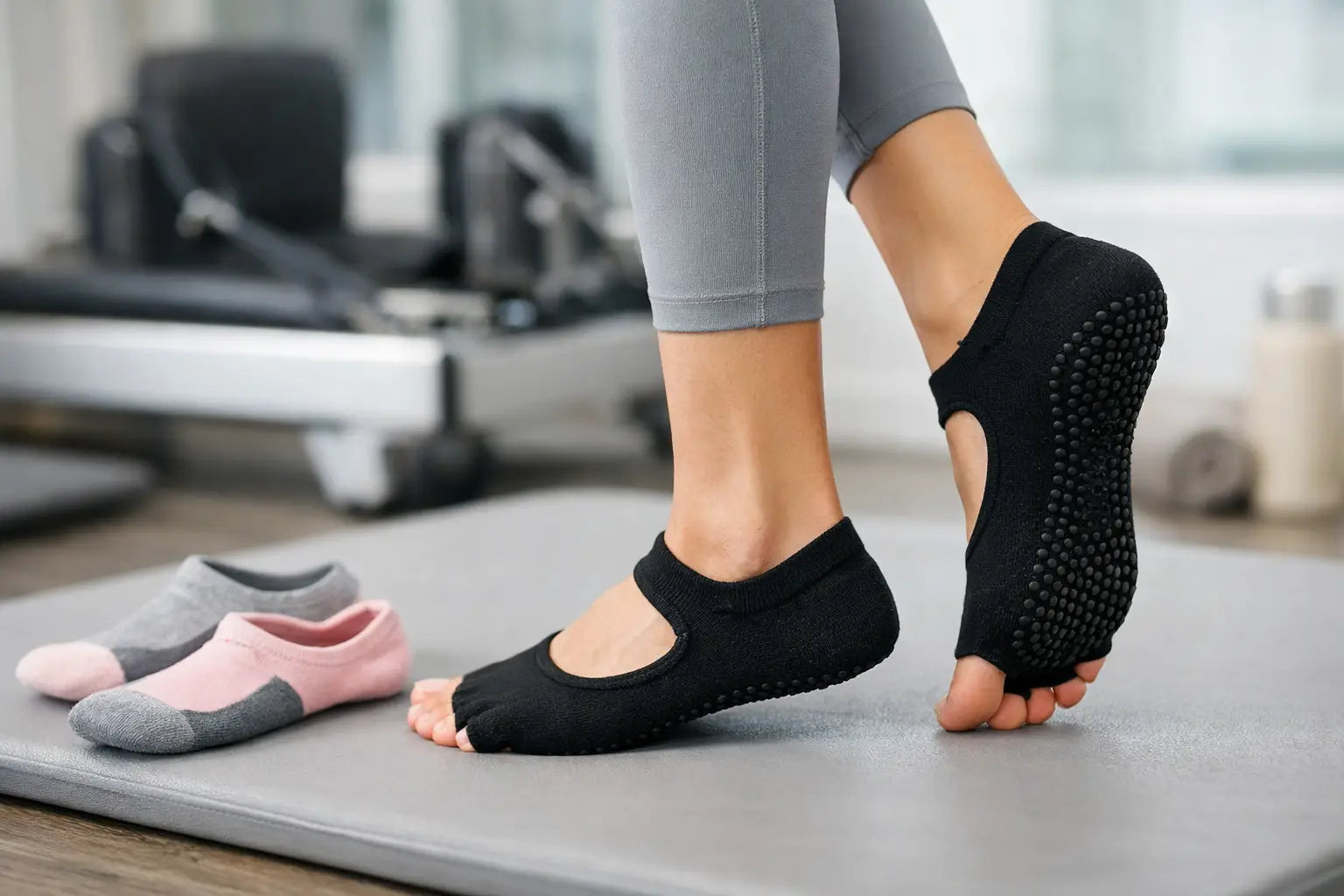
That tiny slip during a reformer transition is usually all it takes to realize your socks matter more than you thought. The best pilates grip socks do more than keep your feet covered - they help you stay steady, move with confidence, and focus on form instead of footing.
If you practice Pilates regularly, the right pair can make your workouts feel cleaner and more supported from start to finish. Grip socks help create traction on studio floors, reformers, and mats, but not every pair feels the same once class gets going. Some slide at the heel, some feel too thick, and some lose their grip after a few washes. Choosing well comes down to comfort, fit, and the kind of practice you actually do.
What makes the best pilates grip socks?
The best pilates grip socks balance traction, breathability, and a secure fit. That sounds simple, but it matters because Pilates asks your feet to do a lot. You point, flex, stabilize, press into platforms, and control small shifts in balance. If your socks bunch up or slide inside your movement, that distraction shows up quickly.
A good grip pattern is the first thing to look at. Small silicone grips across the ball of the foot and heel usually create the most consistent contact. If the grips are too sparse, you may still feel unstable during planks, bridges, or standing work. If they are bulky, they can feel awkward or overly stiff.
Material matters just as much. A soft cotton blend tends to feel familiar and comfortable, while added spandex or elastane helps the sock hold its shape. Breathability is especially important if you take heated classes or tend to run warm. Moisture-wicking fabric can help keep your feet dry, which supports better traction through the full session.
Fit is where many people get it wrong. Socks that are too loose will twist. Socks that are too tight can feel restrictive through the arch and toes. The sweet spot is a close, supportive fit that stays in place without squeezing.
Best pilates grip socks by style
Not every Pilates routine calls for the same sock. The best choice depends on whether you prefer mat classes, reformer sessions, or a mix of both.
Full-toe grip socks
Full-toe styles are a strong choice if you want warmth, coverage, and a more traditional sock feel. They work well in cooler studios and can be a smart pick for reformer classes where you want a bit more cushion between your foot and the equipment.
The trade-off is flexibility. Some people love the extra coverage, while others feel that full-toe socks slightly reduce their connection to the floor. If you are newer to Pilates, they can feel reassuring. If you like a more barefoot feel, they may seem a little too structured.
Open-toe grip socks
Open-toe styles leave the toes exposed while covering the rest of the foot. Many Pilates fans like them because they allow more natural toe movement and make it easier to feel grounded. They also tend to feel cooler, which helps in warmer rooms or more intense classes.
This style can be a great middle ground if you want grip without full coverage. The main downside is that fit has to be right. If the opening pulls awkwardly across the foot, it can become distracting during class.
Toe socks
Toe socks separate each toe, which can improve foot awareness and reduce slipping inside the sock itself. For people focused on alignment and control, that extra separation can feel surprisingly helpful.
They are not for everyone. Some people find them uncomfortable or too fussy to put on. But if you care about toe mobility and want a more precise fit, they are worth considering.
Ballet-inspired grip socks with straps
These socks usually feature a low-cut silhouette with a strap across the top of the foot. They are popular for a reason: they tend to stay put well, especially during flowing transitions or dynamic reformer work.
If your biggest complaint is heel slippage, this style is often the answer. The strap adds security without making the sock feel heavy. They also have a clean, studio-ready look that fits the wellness-lifestyle feel many people want from their workout gear.
How to choose the best pilates grip socks for your routine
The easiest way to find the best pilates grip socks is to match them to your real habits, not an idealized version of your routine. If you mostly do mat Pilates at home, your needs may be different from someone taking reformer classes four times a week.
If you practice at home, comfort may matter more than dress-code compliance or ultra-firm compression. You might prefer a softer sock with moderate grip and breathable fabric that feels easy to wear beyond your workout. If you go to a studio, durability becomes more important. Frequent washing, repeated classes, and equipment use can wear down lower-quality grips quickly.
If you take reformer classes, prioritize a sock that stays locked onto the heel and arch. Those transitions can expose weak fit fast. If you mostly do mat work, you may prefer something lighter and more flexible with a lower profile.
It also helps to think about your feet. If you get cold easily, choose fuller coverage. If your feet sweat more, lean into moisture-wicking materials and open designs. If you have sensitive skin, softer seams and smooth interiors will make a difference.
Features worth paying for
Some upgrades are genuinely useful, and some are just packaging. If you are shopping carefully, focus on features that improve performance and longevity.
A shaped heel is worth it because it keeps the sock from rotating. Arch support can also be a nice bonus, especially if you like a slightly hugged feeling through the midfoot. Reinforced stitching matters more than many people expect. Pilates includes repeated flexing and pressure through key areas, so seams and elasticity need to hold up.
Grip quality is another area where paying a little more often makes sense. Better grips tend to stay effective longer and feel more secure under pressure. Cheap grip patterns may look similar at first, but they can flatten, peel, or lose traction after repeated washes.
That said, more expensive does not always mean better for you. If you prefer a light, barely-there sock, a heavily structured premium pair may feel like too much. The best option is the one that supports your practice without making your feet work around the sock.
Common mistakes when buying grip socks
One common mistake is choosing based on appearance alone. A sleek design is great, but if the grip coverage is limited or the fit is inconsistent, the style will not help much once class starts.
Another mistake is buying one pair and expecting it to do everything. If Pilates is part of your weekly routine, having a few pairs makes life easier and helps each pair last longer. Rotating socks reduces wear and gives elastic fibers time to recover between uses.
People also tend to overlook care instructions. High heat can break down elastic and damage silicone grips, so tossing them into a hot dryer may shorten their lifespan. Washing gently and air drying usually keeps them in better shape.
Why the right socks can improve your Pilates experience
Good grip socks will not fix form on their own, but they can remove one of the small barriers that interrupts good movement. When your feet feel secure, you can settle into the exercise more fully. That often means better control, more confidence, and less unnecessary tension.
There is also a comfort factor that should not be ignored. Wellness routines stick when they feel good. Small upgrades - like socks that fit well, breathe well, and help you move better - can make your home or studio practice feel more polished and more consistent.
For anyone building a stronger at-home wellness routine, details like this add up. That is part of the appeal of shopping with a curated brand like Best Fit & Healthy. You are not just buying another accessory. You are choosing tools that help movement feel better and fit more naturally into daily life.
Best pilates grip socks are the ones you will actually wear
The best pilates grip socks are not necessarily the thickest, trendiest, or most expensive pair on the shelf. They are the pair that gives you steady traction, stays comfortable through every transition, and fits your routine well enough that you reach for them every time.
If your workouts are about feeling stronger, more balanced, and more connected to your body, your socks should support that goal without asking for attention. Choose the pair that helps you move better, and your practice will feel better right away.
Share:
How Long Should You Stay in an Ice Bath?
What to Wear for Pilates Class