
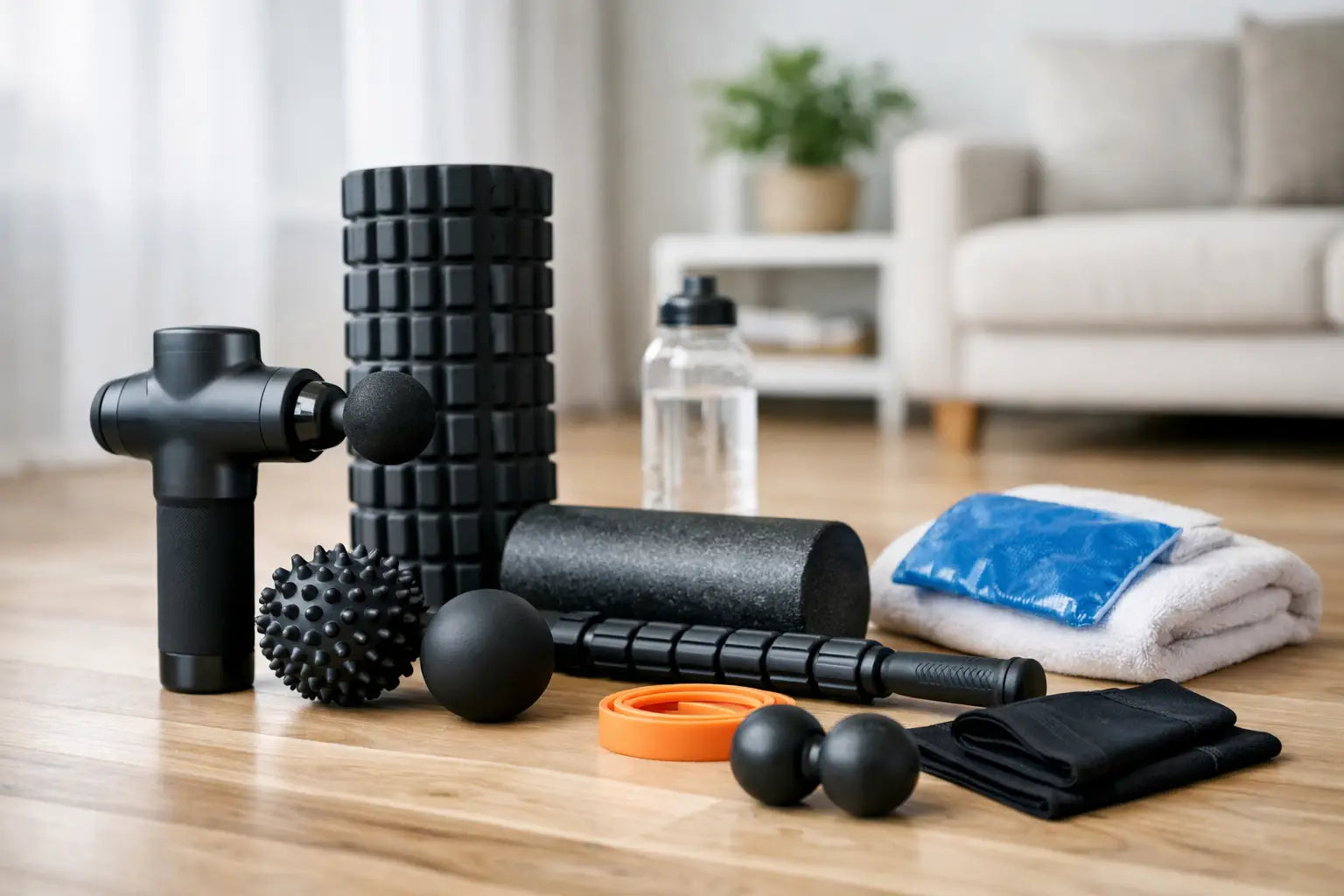
Sore legs after a lower-body workout. Tight shoulders after hours at a desk. That heavy, stiff feeling that makes your next session less appealing than it should be. The best muscle recovery tools at home can change that fast - not by turning recovery into a complicated project, but by making it easier to feel better in your own space.
For most people, the smartest recovery setup is not a giant stack of gear. It is a small group of tools that help with soreness, circulation, mobility, and relaxation, and that fit into real life. If something is too bulky, too technical, or too time-consuming, it usually ends up ignored. The right tools earn a place in your routine because they work and because you will actually use them.
What makes the best muscle recovery tools at home?
The best options do one of three things well. They reduce muscle tension, improve how your body feels and moves, or help you recover more consistently between workouts. A tool does not need to be trendy to be worth it. It needs to solve a problem you have on a regular basis.
That is why your answer may look different from someone else's. A runner with tight calves needs a different setup than someone doing Pilates, strength training, or long desk days with neck tension. The goal is not to own everything. The goal is to build a recovery routine that supports your lifestyle and keeps you moving.
1. Massage guns for quick, targeted relief
A massage gun is one of the most popular at-home recovery tools for a reason. It is fast, easy to use, and great for areas that tend to hold tension, like quads, glutes, hamstrings, calves, and upper back muscles.
If you like immediate relief after workouts, this is often the first tool worth buying. A few minutes on a tight muscle group can help reduce that heavy, overworked feeling and make movement feel smoother. It is especially useful when you want something more effective than stretching alone but do not want a full recovery session.
That said, more intensity is not always better. If you go too hard on sore tissue, it can feel irritating instead of helpful. For many people, moderate pressure and short sessions work best.
2. Foam rollers for mobility and full-body recovery
Foam rollers are still one of the best muscle recovery tools at home because they are simple and versatile. You can use one before workouts to wake up stiff areas or after workouts to release tension and improve mobility.
They are especially helpful for larger muscle groups. Think thighs, glutes, lats, and upper back. A roller gives broad pressure, which makes it a strong choice when your whole body feels tight instead of one isolated spot.
The trade-off is comfort. Foam rolling can feel intense, especially if you are new to it. A smoother, medium-density roller is usually a better place to start than an extra-firm version that makes every session feel like punishment.
3. Resistance bands for active recovery
Not every recovery tool is passive. Resistance bands are excellent for active recovery because they help you strengthen and mobilize at the same time. Light band work can wake up muscles, improve joint stability, and support better movement patterns without adding heavy fatigue.
This matters if your soreness is connected to weakness, poor posture, or limited mobility. Mini bands can be great for glute activation and hip work, while longer bands can help with shoulder mobility, stretching, and gentle strength work.
If you want a recovery routine that does more than just feel relaxing, bands are a smart addition. They help bridge the gap between rest and performance.
4. Red light therapy devices for a modern recovery routine
Red light therapy has become a standout choice for people building a more complete at-home wellness setup. It fits especially well for those who want recovery tools that support muscle comfort while also aligning with a broader self-care routine.
One reason people love red light therapy devices is convenience. You can use them at home without needing to book appointments or carve out a huge block of time. For busy schedules, that matters. It feels easier to stay consistent when recovery is built into your normal day.
It also blends well with a lifestyle-focused approach to wellness. If you already care about movement, recovery, skin health, and feeling your best overall, this kind of tool makes sense as part of a bigger routine instead of a single-purpose purchase.
5. Cold therapy tools for soreness and inflammation
Cold therapy can be a game changer after intense training, long runs, tough leg days, or any stretch where your body feels overheated and beat up. At home, that can look like ice packs, cold wraps, or a more dedicated cold water setup.
The benefit is straightforward. Cold can help calm down soreness and leave you feeling fresher, especially when your muscles feel inflamed or overworked. Many people also like the mental reset that comes with it. It feels energizing and helps shift you out of that sluggish post-workout state.
Cold therapy is not for every moment, though. If your body already feels stiff and tight, heat or gentle movement may feel better first. Recovery is rarely one-size-fits-all.
6. Heating pads and heat therapy for stubborn tightness
When muscles feel knotted, guarded, or chronically tense, heat therapy can be one of the most comforting tools in the house. Heating pads are especially useful for the neck, shoulders, lower back, and hips.
Heat tends to work well when the issue is tightness more than fresh post-workout soreness. It helps your body relax, which can make stretching, mobility work, or even a short walk feel much better afterward. For people balancing workouts with stress and long sitting hours, heat often earns regular use.
This is also one of the easiest tools to stick with. It requires very little effort, and that convenience matters when building habits that last.
7. Yoga mats and mobility tools that make recovery easier
A good yoga mat may not sound like a recovery tool at first, but it creates the foundation for one. If you want to stretch more, do mobility work, follow a short Pilates session, or simply get on the floor for recovery exercises, comfort matters.
The same goes for small mobility accessories like blocks or straps. They make recovery sessions feel more accessible, especially if flexibility is not your strength yet. Instead of forcing positions, you can support your body and build range gradually.
This category is easy to overlook because it is not flashy. But often, the best purchase is the one that helps you use all your other tools more consistently.
8. Compression tools for tired legs and post-workout fatigue
Compression can feel especially good when your legs are heavy after training, travel, or long days on your feet. Depending on your setup, that might mean compression sleeves, socks, or more advanced recovery gear.
The appeal is simple: support and relief without much effort. Compression works well for people who want recovery to fit around work, chores, or evening downtime. You can use it while winding down instead of needing a dedicated session.
It may not replace mobility work or massage for deep tension, but it can be a great add-on for circulation and general post-workout comfort.
9. Recovery balls for feet, hips, and hard-to-reach tension
Recovery balls are small, affordable, and surprisingly effective. They are perfect for precise areas where a foam roller feels too broad, like the feet, glutes, chest, or the muscles around the shoulder blades.
If you deal with plantar fascia tightness, post-run foot fatigue, or those stubborn knots that never seem to go away, a recovery ball can do a lot with very little space or effort. It is also one of the easiest tools to keep nearby and use for a few minutes at a time.
This is a great example of a low-cost tool delivering high value. Not every good recovery product needs to be a major investment.
How to choose the right at-home recovery tools
The best setup depends on what slows you down most. If soreness is your issue, start with massage, cold therapy, or red light therapy. If stiffness is the bigger problem, look at foam rollers, heat, and mobility tools. If you want better long-term movement, resistance bands and a good mat deserve more attention.
It also helps to think in terms of routine, not just products. A tool is only useful if it fits your habits. Someone with ten free minutes a day may get more benefit from one easy device than from a full recovery kit that feels overwhelming.
For many people, the sweet spot is a simple three-part setup: one tool for tension relief, one for mobility, and one for recovery comfort. That could mean a massage gun, resistance bands, and a heating pad. Or a foam roller, red light therapy device, and cold therapy option. The point is balance.
Build a recovery routine you will actually keep
The most effective home recovery routine usually looks pretty simple. Use one quick tool after workouts, one supportive option on rest days, and one habit that helps your body stay mobile through the week. That is enough to create momentum.
You do not need a clinic-style setup to feel the difference. You need tools that fit your life, support your goals, and make it easier to move better, recover faster, and feel stronger every day. If you are building that kind of routine, Best Fit & Healthy reflects where wellness is headed - practical, elevated, and designed for real life at home.
Start with what your body asks for most often. The right recovery tool is usually the one that makes tomorrow feel better than today.
Share:
Daily Mobility Routine at Home That Works
How to Build Home Recovery Routine That Sticks