
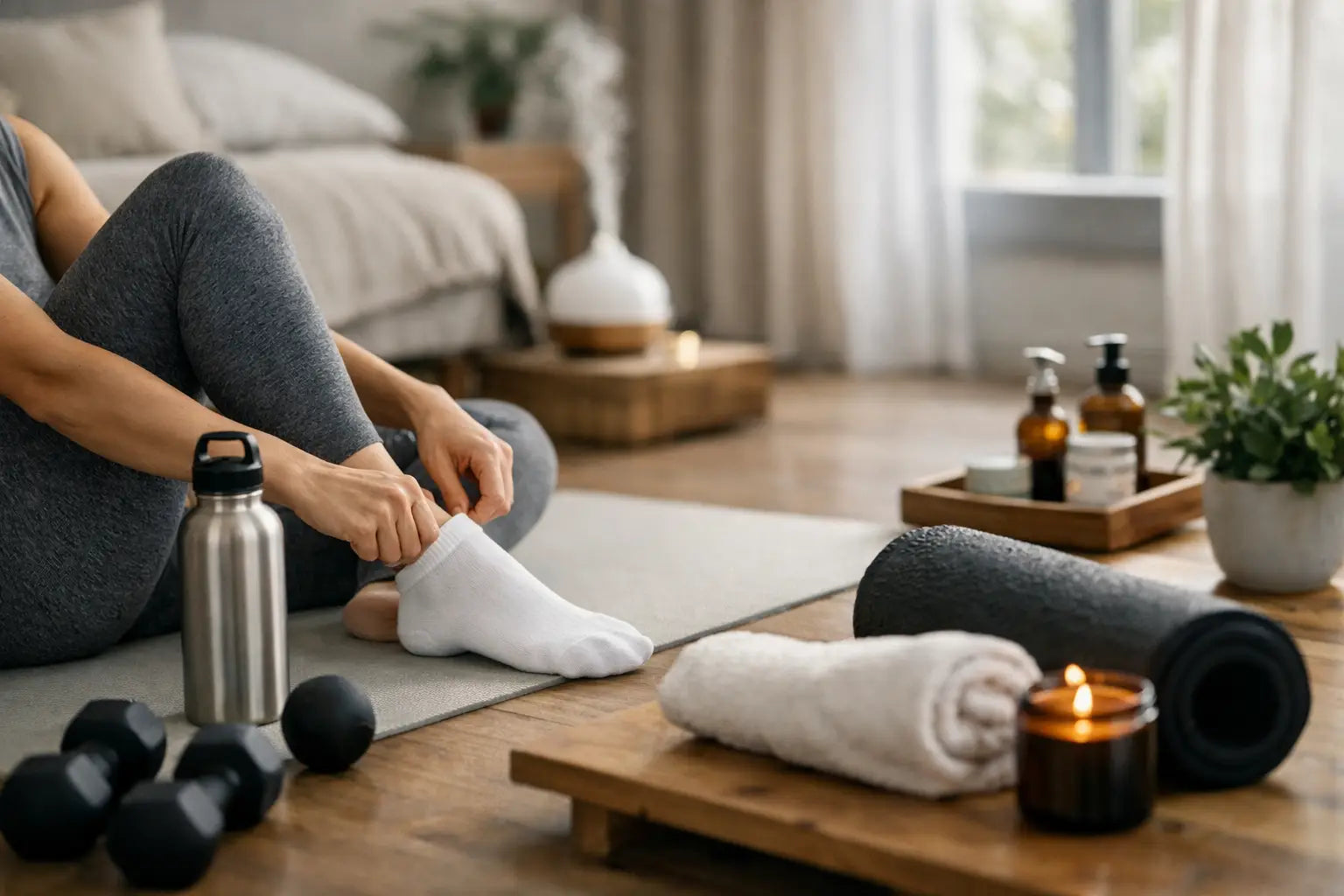
You do not need a perfect gym setup or a two-hour self-care block to feel better in your body. If you are figuring out how to build home recovery routine that actually fits real life, the goal is not doing more. It is choosing a few effective habits you will keep using when work runs late, your workout was harder than expected, or your energy is low.
A good recovery routine should help you feel looser, calmer, and more ready for tomorrow. It should support sore muscles, stiff joints, stress, sleep, and even the way your skin and posture look and feel. The best part is that home recovery can be simple. With the right tools and a clear plan, it becomes part of your day instead of another item you keep putting off.
What a home recovery routine should actually do
Recovery is often treated like a bonus, but it is really part of your training and wellness routine. Whether you lift weights, do Pilates, walk daily, sit at a desk, or juggle all of the above, your body needs time and support to reset.
At home, that usually means reducing tension, improving circulation, restoring mobility, and giving your nervous system a chance to slow down. For some people, recovery is about bouncing back faster after workouts. For others, it is about less stiffness in the morning, fewer tight shoulders, better posture, or a more consistent wind-down routine at night. It depends on your goals, which is why one person may benefit most from a foam roller and stretching while another gets more value from red light therapy, cold therapy, or a short evening mobility flow.
The right routine is not the most advanced one. It is the one that solves your actual problems.
How to build home recovery routine around your goals
Start with the reason you want one. If your legs feel heavy after strength training, your routine should look different from someone trying to ease neck tension from long hours at a laptop. When people skip this step, they end up with random tools and no real system.
Think in terms of one primary goal and one secondary goal. Your primary goal might be faster muscle recovery, less daily tightness, improved flexibility, better sleep, or support for skin health and relaxation. Your secondary goal could be posture, stress relief, or creating a more consistent evening ritual.
Once you know that, it becomes easier to choose what belongs in your setup. If your main issue is soreness after workouts, prioritize muscle-focused recovery like stretching, massage tools, compression, or cold therapy. If your body feels stiff more than sore, mobility work and heat or light-based recovery may make more sense. If your bigger issue is feeling wired at night, your routine should include calming elements you can repeat consistently.
Keep your routine small enough to follow
This is where most people get it wrong. They build a recovery plan that looks impressive on paper but takes 45 minutes and requires motivation they do not have every day. A better move is to build a short base routine first, then add optional layers.
Your base routine can be as simple as 10 to 15 minutes. That might mean five minutes of stretching, five minutes with a massage or mobility tool, and a short recovery practice before bed. If you have more time, you can add longer sessions a few times a week. But your everyday version should feel easy to start.
Consistency matters more than intensity here. A short routine you repeat four or five days a week usually does more for your body than a long session you only manage once in a while.
The essential pieces of a strong at-home setup
You do not need every wellness product on the market. You need a few categories that cover the basics of recovery and fit your lifestyle.
Mobility comes first. This can include a yoga mat, stretch strap, or supportive accessories that make it easier to move through basic stretches and gentle flows. If you already do yoga or Pilates, this part may feel natural. If you do not, keep it simple and focus on the areas that tighten up most often, like hips, hamstrings, calves, chest, and upper back.
Next is tension relief. Massage balls, rollers, and similar tools can help target areas that hold stress or soreness. These are especially useful if you train regularly or spend hours sitting. The trade-off is that some tools are great for deep pressure but may feel too intense when you are already very sore. In those moments, lighter pressure or gentle mobility may be the better choice.
Then think about recovery boosters. Depending on your goals, this might include red light therapy for muscle recovery and wellness support, cold therapy for post-workout refresh and circulation, or beauty and skin-focused tools that help your recovery routine feel more complete. A lot of people stay consistent when their routine supports both performance and self-care, not just one or the other.
Finally, include comfort. A recovery routine should feel inviting enough that you want to return to it. That can be as simple as creating a clean corner in your home with your mat, recovery tools, and a towel ready to go. If it is easy to access, you are more likely to use it.
Build a weekly rhythm instead of guessing every day
One of the easiest ways to make recovery stick is to stop deciding from scratch every evening. Give your week some structure.
After harder workout days, focus on muscle recovery. This is a good time for cold therapy, massage work, or red light sessions, followed by light stretching. On lighter movement days, shift toward mobility and longer range-of-motion work. On rest days, keep recovery gentle and calming with a short walk, light stretching, or a simple evening ritual that helps your body settle.
You can also split your routine by time of day. Morning recovery works well for mobility, posture, and circulation. Evening recovery is often better for releasing tension and winding down. If your schedule is busy, even five to ten minutes after a workout and another few minutes before bed can create a solid rhythm.
Make your home recovery routine realistic for your space
A home routine only works if it fits your environment. If you live in a small apartment, your setup should be compact and easy to store. If you have a dedicated workout room, you can create more of a wellness station with a few recovery categories in one place.
The key is removing friction. Keep your most-used tools visible. Roll up your mat where you can grab it fast. Store smaller tools in a basket instead of a drawer you forget about. If you use red light or cold therapy equipment, place it where it is easy to work into the time you already spend at home, not somewhere that turns setup into a chore.
This is one reason people like building recovery at home. It puts your routine on your schedule. You do not need to book an appointment or leave the house to get the benefits.
A simple example of how to build home recovery routine
If you want a practical starting point, use this as a model and adjust based on your goals.
After workouts, spend five minutes doing light stretches for the muscles you trained. Follow that with five to ten minutes of a recovery tool that matches what your body needs, whether that is massage, cold therapy, or red light support. Later that evening, do a short wind-down with gentle mobility, breath work, or a skin and self-care step that helps you slow down.
On non-training days, use a shorter version focused on movement quality and tension relief. This could be a 10-minute mobility session in the morning or a few minutes of targeted recovery in the evening.
That may not sound dramatic, but that is exactly why it works. It is realistic, repeatable, and easy to build on over time.
Signs your routine is working
You do not need to overanalyze every session. Usually, progress shows up in small ways first. You may notice less stiffness getting out of bed, smoother workouts, better flexibility in a few key areas, or less tension in your neck and shoulders by the end of the day.
You might also find that your body feels more supported overall. Recovery is not only about fixing soreness after the fact. It helps you stay more consistent with movement, feel more comfortable in your body, and keep your health habits going without burning out.
If your routine feels too long, too complicated, or too hard to maintain, that is useful feedback. Adjust it. A smart recovery routine should evolve with your schedule, training style, and goals.
At Best Fit & Healthy, that is the real advantage of at-home wellness. You can build a routine that works for your body, your pace, and your everyday life. Start small, make it easy to repeat, and let recovery become the part of your routine that helps everything else feel better.
Share:
9 Best Muscle Recovery Tools at Home
9 Best Red Light Therapy Devices