
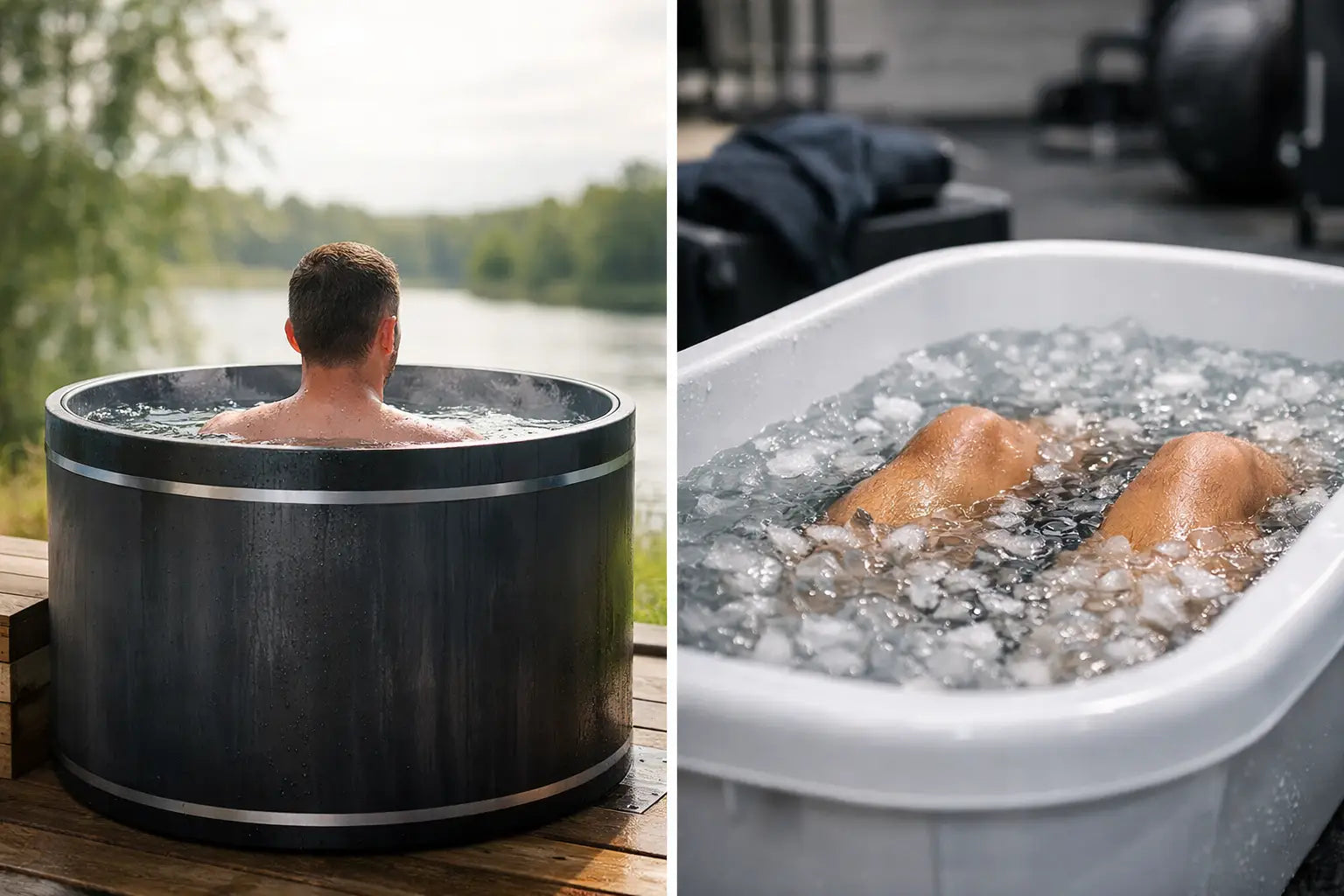
A bag of gas-station ice dumped into the tub can feel like a wellness win for exactly one session. After that, most people start asking a better question: when it comes to cold plunge vs ice bath, which one actually fits your routine, your space, and your recovery goals?
That question matters more than the internet makes it seem. Cold water therapy is often pitched as one-size-fits-all, but your best option depends on how often you plan to use it, how much setup you can tolerate, and whether you want a quick challenge or a repeatable at-home ritual. If your goal is to move better, recover faster, and feel stronger every day, convenience matters just as much as temperature.
Cold plunge vs ice bath: the real difference
People often use these terms like they mean the same thing, but there is a practical difference. An ice bath usually means a standard tub or container filled with cold water plus bags of ice. It is the more DIY option. A cold plunge usually refers to a purpose-built setup designed for cold water immersion, often with better insulation, more consistent temperatures, and a more comfortable user experience.
The biggest gap is control. With an ice bath, your temperature can vary based on room conditions, water volume, and how much ice you add. With a cold plunge, the experience is usually more predictable. That matters if you want consistency from session to session instead of guessing whether today’s bath is merely chilly or shockingly cold.
There is also a difference in how each option fits into real life. Ice baths can work well for occasional use, especially if you are testing whether cold therapy is for you. Cold plunges are usually better for people who want cold exposure to become part of a steady wellness routine rather than an occasional recovery experiment.
Which feels better to use regularly?
If you are planning to use cold therapy once in a while after a hard workout, an ice bath may be enough. It is simple, familiar, and accessible. Fill the tub, add ice, get in, get out. For some people, that is all they need.
But regular use changes the equation. Hauling bags of ice, timing the melt, cleaning the tub, and dealing with inconsistent water can turn a healthy habit into a chore. That is where a cold plunge starts to feel less like a luxury and more like a practical upgrade.
A dedicated plunge setup is built to reduce friction. Less friction means you are more likely to actually use it. And in wellness, the routine you can stick with almost always beats the perfect routine you abandon after two weeks.
Comfort matters too. Not because cold therapy should be cozy, but because the setup should not add unnecessary hassle. A better-designed plunge can make getting in, sitting comfortably, and getting out feel smoother and more intentional. That makes it easier to treat cold exposure as part of your broader home recovery practice, right alongside stretching, red light therapy, mobility work, or a post-workout wind-down.
Recovery benefits: are they actually different?
In terms of the basic effect, both methods can support recovery. Cold water immersion is commonly used to help reduce that heavy, inflamed feeling after intense exercise and to support a refreshed, more awake state afterward. Whether the water gets cold through ice or through a dedicated plunge setup, your body still experiences the stress of the cold.
So if the question is whether both can deliver the core cold-therapy effect, the answer is yes. The difference is less about whether they work and more about how reliably you can use them.
That said, there is an it-depends factor here. If your water is not consistently cold enough, or if the process is so inconvenient that you skip sessions, the real-world benefit drops. For active adults trying to build an at-home wellness routine, consistency is the advantage that often matters most.
There is also the question of timing. Some people love cold exposure after intense training. Others prefer it as a morning reset, a mental toughness ritual, or a way to recharge after a long day. If you want that flexibility, a cold plunge tends to support it better because it is ready when you are. An ice bath usually requires planning.
Cost, effort, and long-term value
This is where cold plunge vs ice bath becomes a lifestyle decision.
An ice bath usually wins on upfront cost. If you already have a bathtub or a basic container, your main recurring expense is ice. That makes it appealing for beginners or anyone who wants to try cold therapy without committing to more equipment.
The hidden cost is effort. Ice has to be bought, carried, stored, and added every time. If you use cold therapy often, those little inconveniences stack up. Over time, the low-entry option can become surprisingly high-maintenance.
A cold plunge usually costs more at the start, but it can save time and reduce the repeated hassle that makes habits harder to maintain. For people investing in daily wellness at home, that trade-off often makes sense. You are not just paying for colder water. You are paying for ease, consistency, and a setup that supports long-term use.
That is often how premium wellness tools earn their place. The value is not only in what they do, but in how they make healthy routines easier to keep.
Space and setup at home
Your home setup matters just as much as your budget. If you live in a smaller space or want something flexible, an ice bath might feel easier because it can be improvised when needed. You are not dedicating a permanent spot to it.
But temporary setups can also become messy fast. Bathrooms are shared spaces. Tubs need to be cleaned. Ice melts. Water splashes. What sounds easy on paper can become a hassle if you live with family, share a bathroom, or simply do not want your recovery routine to interrupt your day.
A cold plunge can be a better fit if you want a dedicated wellness corner at home. That can be especially appealing for people who already prioritize movement, recovery, and self-care in a regular way. Instead of piecing together a routine every time, you create a space that supports it.
For many people, that shift is powerful. When recovery has a home, it becomes part of your lifestyle instead of something you squeeze in only when motivation is high.
Who should choose an ice bath?
An ice bath makes sense if you are still experimenting, if you only want occasional cold exposure, or if budget is the main factor right now. It is also a reasonable choice if you do not mind the prep and actually prefer the flexibility of a DIY setup.
This option can work especially well for someone who wants to test tolerance, learn how their body responds, and decide later whether cold therapy deserves a bigger role in their wellness routine.
The main caution is sustainability. If you know you are someone who sticks with routines only when they are simple, the repeated setup may wear you down faster than expected.
Who should choose a cold plunge?
A cold plunge is a stronger fit if you want consistency, convenience, and a more elevated home recovery experience. It is ideal for people who already take wellness seriously and want tools that support everyday habits without adding extra friction.
If you are balancing workouts, long workdays, mobility goals, and overall recovery, a dedicated plunge can make cold therapy feel much more practical. The same goes for anyone building a home wellness routine that includes multiple tools and rituals. In that context, a plunge is not just a recovery device. It becomes part of a system designed to help you feel better day after day.
For a brand like Best Fit & Healthy, that kind of at-home integration is the point. Wellness works best when it fits real life.
The best choice is the one you will keep using
There is no universal winner in cold plunge vs ice bath. If you want the cheapest way to get started, an ice bath can absolutely do the job. If you want a more repeatable, convenient, and lifestyle-friendly option, a cold plunge usually makes more sense.
The smartest choice is not the one that looks most intense online. It is the one that matches your habits, your home, and the version of wellness you can actually maintain. Build around what feels doable now, and let your routine grow from there. That is how recovery stops being a trend and starts becoming part of how you take care of yourself.
Share:
How to Improve Posture Daily
What Helps Sore Muscles Fast? 9 Smart Fixes