
You can feel bad posture before you really notice it. It shows up as a stiff neck during afternoon emails, tight hips after a long drive, or that heavy, slouched feeling that makes your whole body seem more tired than it should. If you're wondering how to improve posture daily, the good news is that it usually has less to do with forcing yourself to sit perfectly straight and more to do with building better movement into your normal routine.
Posture is not a single pose you hold all day. It's the way your body supports you through sitting, standing, walking, working out, and recovering. The goal is not to look rigid. The goal is to feel aligned, strong, and comfortable enough that better posture becomes your default instead of something you remember once and forget by lunch.
What better posture actually looks like
A lot of people picture posture as shoulders pulled way back, chest pushed forward, and abs squeezed tight. That usually creates more tension, not less. Better posture is more balanced than dramatic.
When you're standing well, your ears roughly stack over your shoulders, your ribs sit over your hips, and your weight feels evenly distributed through both feet. When you're sitting well, your back is supported by your core and seat, not by collapsing into one hip or craning your neck toward a screen. There is still movement in good posture. In fact, movement is part of it.
That's why posture work often fails when it becomes too strict. If your strategy is to tense up and "sit straight" for ten minutes, you'll usually snap right back into old patterns. A better approach is to improve the body positions you spend the most time in and give tight, underused muscles a reason to start working differently.
How to improve posture daily without overthinking it
The simplest way to improve posture is to stop treating it like a correction and start treating it like a habit loop. Your body adapts to what you repeat. If you repeat long hours of rounded shoulders, forward head position, and very little movement, that shape starts to feel normal. If you repeat small resets throughout the day, your body starts to trust a better position.
Start with your morning. Before you check your phone or open your laptop, spend two to five minutes moving your spine and opening the front of your body. A few cat-cow stretches, a chest opener, a kneeling hip flexor stretch, and some shoulder rolls can change how the rest of the day feels. This matters because most adults wake up a little stiff, then immediately fold forward into screens, steering wheels, and kitchen counters.
During the day, use transitions as posture cues. Every time you refill your water, stand up from your desk, or finish a meeting, reset your body. Let your shoulders relax down, gently bring your head back over your torso, and take one full breath into your ribs instead of your upper chest. It takes seconds, but repeated enough, it starts to stick.
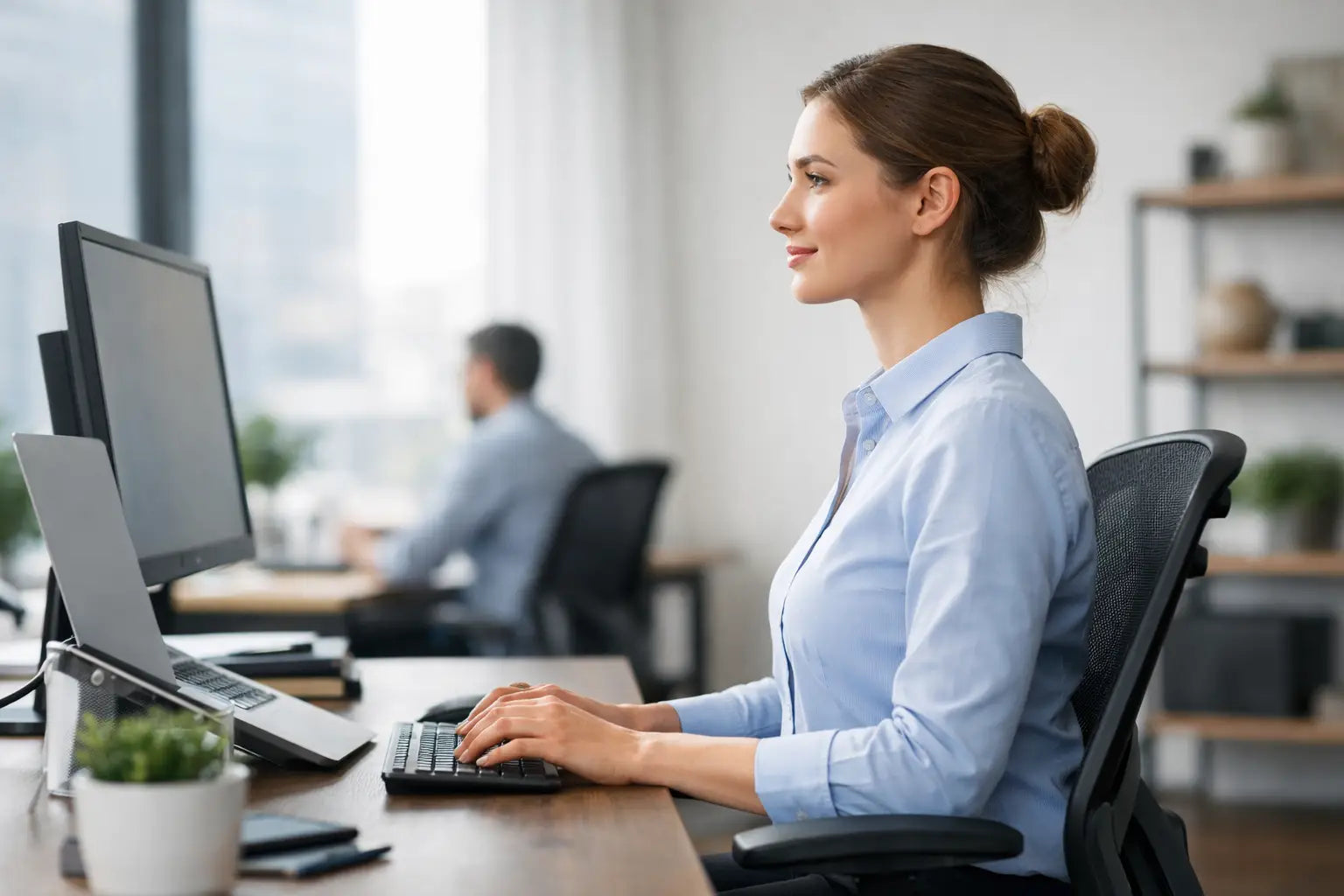
If you work from home or spend a lot of time seated, your setup matters too. Your screen should be high enough that you are not constantly looking down. Your feet should rest flat on the floor or on support. Your arms should land comfortably instead of reaching forward all day. You do not need a perfect designer workspace, but you do need a setup that does not force your body into strain for hours at a time.
The muscles that matter most
Posture is not just about one area. It's a whole-body coordination issue. Still, a few areas tend to make the biggest difference.
Your upper back plays a major role. When it gets stiff, your neck and shoulders often take over. Gentle thoracic mobility work, rowing movements, and exercises that strengthen the muscles between your shoulder blades can help you feel more open through the chest without forcing anything.
Your core matters too, but not in the flatten-your-stomach way social media often presents. A functional core helps your ribs and pelvis stay better stacked, which supports your spine in a more natural position. Think stability, breathing, and control, not just crunches.
Your glutes and hips are another big piece of the puzzle. Long sitting hours can leave the front of the hips tight and the back side underactive. That combination tends to pull your posture out of balance, especially when standing or walking. Glute bridges, split squats, bodyweight deadlifts, and regular hip-opening stretches can go a long way.
It also helps to pay attention to your feet. If you always lean into one hip, lock your knees, or collapse your arches, that instability travels upward. Standing with even pressure through both feet can subtly improve alignment all the way to your neck.
Daily habits that quietly wreck posture
Some posture issues come from obvious things like poor desk ergonomics, but others are built into everyday habits. Looking down at your phone for hours is one of the biggest. So is carrying a bag on the same shoulder every day, lounging in bed while working, or spending your workouts focused only on mirror muscles like chest and quads while ignoring upper back and posterior chain strength.
Stress also changes posture more than people realize. When you're tense, your shoulders creep up, your jaw tightens, and your breathing gets shallow. That creates a posture pattern that feels guarded and compressed. If your body is always in that mode, stretching alone may not fix it. Sometimes the better posture move is slowing down your breathing, walking for ten minutes, or giving your body a chance to recover.
Sleep can play a role as well. If you wake up stiff every morning, your pillow height, mattress support, or sleep position may be contributing. Better posture is easier to maintain when your body is actually recovering overnight.
A realistic at-home posture routine
You do not need an hour-long mobility session to see progress. Most people do better with a short routine they can repeat consistently. Ten minutes is enough if you use it well.
Start with one minute of deep breathing while lying on your back with your knees bent. This helps your ribs settle and gets you out of that chest-breathing pattern that often comes with slouching and tension. Then move into a few minutes of mobility work, focusing on the chest, upper back, and hips. After that, do a few strengthening moves that reinforce better alignment, like glute bridges, band pull-aparts, wall slides, or bird dogs.
The key is matching the routine to your day. If you sit a lot, bias it toward opening the hips and chest. If you work out hard but still feel tight and rounded, add more upper back mobility and recovery. If you're already active but posture still slips, your issue may be less about exercise volume and more about what happens in the other 23 hours of the day.
This is where wellness tools can fit naturally into your routine. Supportive yoga and Pilates accessories, recovery tools, and simple at-home mobility products can make it easier to stay consistent because they reduce friction. The best routine is usually the one that feels easy enough to repeat, especially on busy days.
When to strengthen and when to loosen up
A lot of posture advice misses this trade-off. Not everyone needs the same fix. Some people are stiff and need mobility. Others are flexible but lack strength and control. Many need both.
If your chest, neck, and hip flexors feel constantly tight, stretching may help, but it will work better when paired with strengthening the muscles that support better alignment. If you are always trying to "sit up straight" but feel fatigued quickly, you may need more endurance in your upper back and core instead of more stretching.
Pain is another factor. Mild tension from daily habits often responds well to movement and consistency. Sharp pain, numbness, tingling, or posture changes tied to injury deserve more individualized attention. Better daily habits can support recovery, but they should not replace care when something feels clearly off.
Make posture part of your lifestyle, not a separate project
The most effective posture changes are the ones that blend into your normal life. Walk more often. Break up long sitting sessions. Strength-train with good form. Use recovery as maintenance, not just as damage control. Set your home environment up so it supports how you want to feel.
That mindset fits modern wellness better anyway. Posture is not just about appearance, although standing taller does change how you look and carry yourself. It's also about energy, mobility, comfort, and how well your body handles the demands of your day. When your posture improves, workouts often feel stronger, breathing feels easier, and those low-level aches stop stealing attention.
At Best Fit & Healthy, that everyday approach matters. The right at-home tools can support better movement, recovery, and consistency, but the bigger win is building a routine you actually enjoy enough to keep.
If you want to improve posture daily, think smaller and smarter. A few minutes of movement, better setup choices, and more awareness during ordinary moments can change more than one dramatic reset ever will. Your body responds to what you practice, and every day gives you another chance to practice feeling stronger, more open, and more at home in your own alignment.
Share:
Best At Home Recovery Tools for Daily Use
Cold Plunge vs Ice Bath: What Fits Best?