
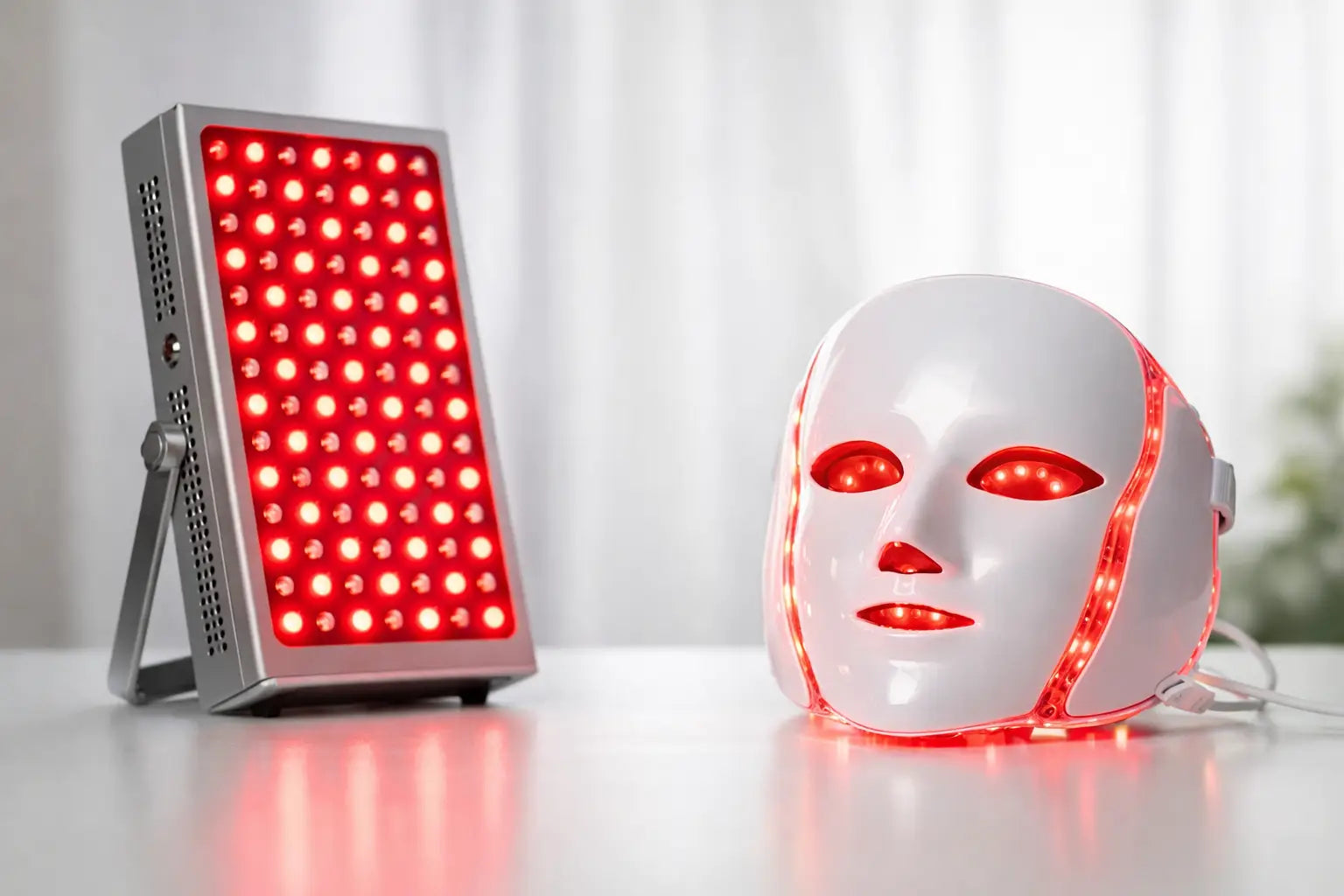
Some people want red light therapy to fit into a 10-minute skincare ritual. Others want it to help with sore muscles after strength training, long workdays, or tight hips after Pilates. That is where the red light panel vs mask decision really starts - not with specs, but with how you want this tool to fit your life.
Both options can support an at-home wellness routine, but they are built for different priorities. A mask is usually designed for facial treatments and convenience. A panel is more flexible, with the ability to cover larger areas like the face, neck, back, legs, or shoulders. If your goal is to buy once and use it often, the right choice comes down to coverage, comfort, consistency, and how broad you want your results to be.
Red light panel vs mask: the real difference
The simplest way to think about it is this: a mask is specialized, and a panel is versatile.
A red light mask is shaped to sit close to the face. That makes it a natural fit for people focused on appearance-related goals such as supporting smoother-looking skin, a more refreshed complexion, and an easy beauty routine at home. It feels familiar because it works like a wearable treatment. You put it on, stay seated, and let it run.
A red light panel works more like a multi-use wellness device. Instead of treating one fixed area, it can be positioned in front of different parts of the body. That matters if your routine includes workouts, recovery sessions, mobility work, or general whole-body wellness habits. One day you might use it on your face. The next day it might be your neck, shoulders, lower back, or quads.
That does not automatically make a panel better. It just makes it broader. If your needs are narrow and facial, a mask may feel more direct. If your needs change from day to day, a panel usually gives you more room to grow.
If your main goal is skincare
For skincare-first shoppers, a mask often feels like the obvious pick. It is built for the face, simple to use, and easy to treat as part of a nightly routine. If you already cleanse, apply serum, and keep a regular self-care rhythm, adding a mask can feel low effort.
The biggest strength here is consistency. Convenience often wins over ambition. A device that is easy to grab and use while reading or relaxing tends to get used more often than one that feels like it requires setup. For many people, that alone makes a mask a strong choice.
Still, there is a trade-off. A mask is focused almost entirely on the face, and sometimes the neck depending on the design. If you later decide you also want support for chest area exposure, shoulder tension, post-workout recovery, or larger treatment zones, the mask can start to feel limited. It does one job well, but it does not always stretch beyond that job.
A panel can also work for skincare, especially if you want to treat the face without committing to a face-only device. It may not feel quite as effortless as slipping on a mask, but it gives you more flexibility. That can be appealing if beauty and recovery both matter to you.
If your main goal is recovery and full-body use
This is where panels usually pull ahead.
If you lift weights, do hot yoga, run, cycle, or spend long hours sitting at a desk, your body probably asks for support in more than one place. Maybe your shoulders get tight after upper-body days. Maybe your knees feel it after cardio. Maybe your lower back needs attention after travel or work. A panel is built for that kind of range.
Because it can cover larger areas, a panel makes more sense for people who see red light therapy as part of a broader recovery system. It fits naturally alongside stretching, massage tools, mobility work, and downtime habits that help you move better and feel stronger every day.
Masks are not built for that job. If you are buying with recovery in mind, a mask can end up feeling like the wrong category altogether. It may still support facial skin goals, but it will not replace a device that can work across the body.
Comfort, setup, and daily use
This part gets overlooked, but it matters more than most people expect.
A mask is wearable, which sounds convenient, and often is. But some users love that close fit while others do not. Depending on the style, a mask can feel warm, restrictive, or awkward if you do not enjoy having something strapped to your face. If comfort affects whether you use it regularly, that is worth taking seriously.
A panel does not sit on the skin, so some people prefer the more open experience. You place it at the right distance, sit or stand in front of it, and treat the area you want. That can feel less claustrophobic and more adaptable. It also works well for people who do not want a device pressing against freshly cleansed skin.
The trade-off is that panels usually need a bit more intentional setup. You may need a surface, stand, or dedicated spot in your home routine. A mask is easier to store in a drawer and pull out quickly. So if your space is small or your routine needs to be ultra-simple, that can influence your decision.
Value over time
Price matters, but value matters more.
At first glance, a mask can seem like the more focused purchase. If facial use is your only goal, paying for a dedicated skincare tool may feel smart and efficient. There is less temptation to overbuy features you may never use.
But if you think there is a good chance you will want more than facial treatment later, a panel often delivers better long-term value. One device can support skin goals and recovery goals, which makes it easier to justify as part of a complete home wellness setup.
This is especially true for people building routines around longevity, movement, and self-care instead of one narrow outcome. A panel can grow with your habits. That makes it a practical choice for shoppers who want their wellness tools to stay relevant instead of getting replaced a few months later.
Who should choose a mask?
A mask is usually the better fit if you are mainly focused on facial skincare, want a device that feels beauty-routine friendly, and prefer something compact and simple. It also makes sense if you know you are most likely to use red light therapy while sitting down at the end of the day and want the least amount of setup possible.
For the person who wants a self-care tool that blends into an existing skincare rhythm, a mask can feel easy to stick with. And when a device is easy to stick with, that consistency becomes part of the benefit.
Who should choose a panel?
A panel is usually the better fit if you want flexibility, larger coverage, and support that extends beyond the face. It is a stronger match for active adults, people with recovery goals, and anyone building a more complete at-home wellness routine.
It is also the better choice if you do not want to outgrow your device. If you care about skin appearance but also want a tool that can support your neck, back, legs, or shoulders, a panel gives you more ways to use it without needing a second purchase.
For many households, that makes the panel the more lifestyle-friendly option. It can serve multiple goals and sometimes multiple users, which adds to its everyday value.
The best choice depends on how you live
The red light panel vs mask question is really a routine question. Are you looking for a focused facial device that makes skincare feel easier? Or do you want a more versatile tool that supports both beauty and recovery?
If your answer is skincare first, a mask may be all you need. If your answer includes workouts, soreness, tension, mobility, or a more complete self-care setup, a panel is usually the smarter move. Best Fit & Healthy is built around that kind of practical home wellness thinking - tools that do more, fit real routines, and help you stay consistent.
Choose the device you will actually use, not the one that just sounds impressive. The best wellness upgrade is the one that fits your life well enough to become part of it.
Share:
Red Light Mask Review: Worth It at Home?
How to Start Cold Plunging Safely