
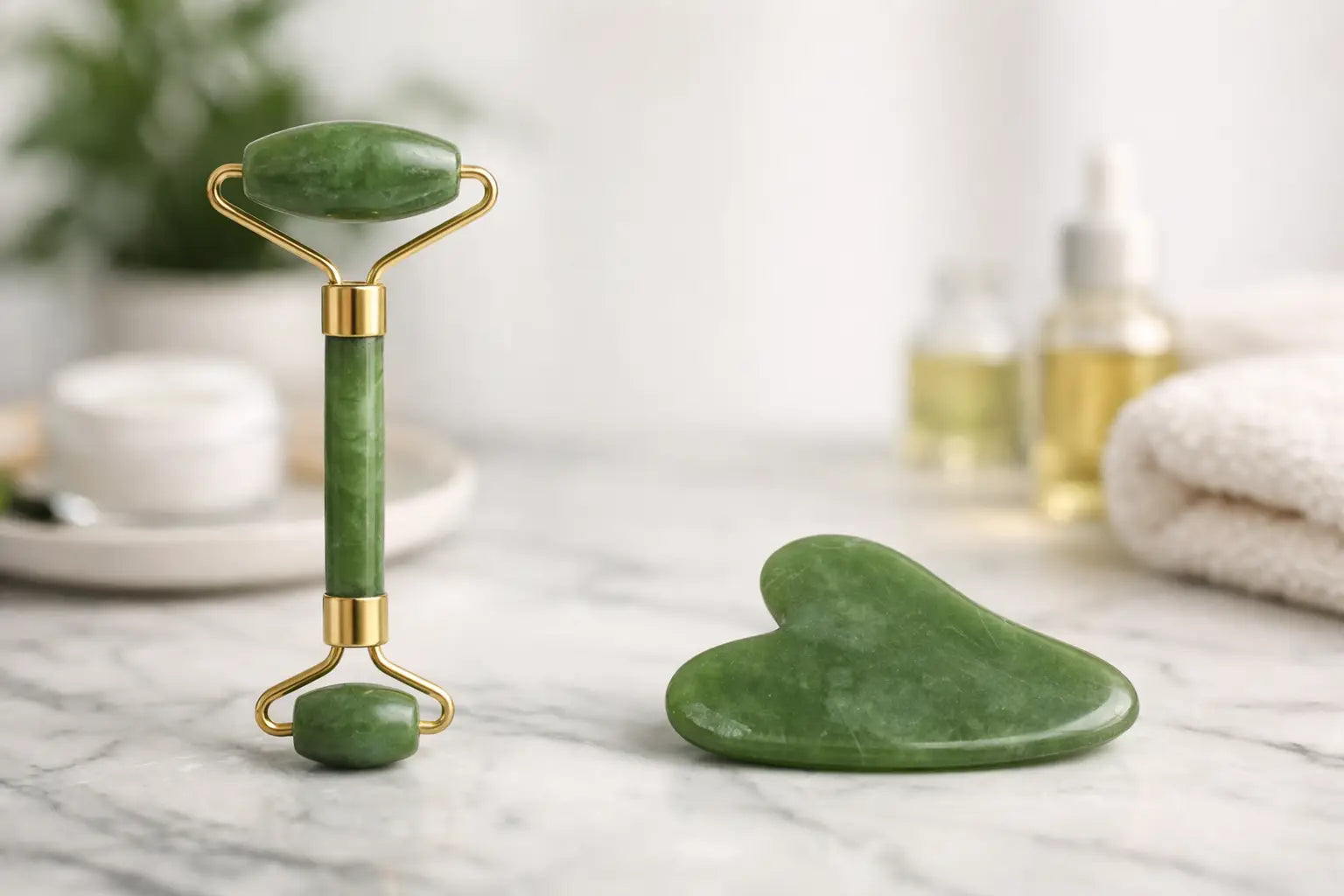
Some mornings, your skin wants a cold, calming reset. Other days, your jaw feels tight, your cheeks look puffy, and your whole face seems like it needs a little more intention. That is where the face roller vs gua sha conversation gets practical. Both tools can support a smoother, more refreshed look at home, but they do it in different ways, and the right choice depends on what you want your routine to do.
If you are building a beauty routine that also fits into a bigger wellness lifestyle, this choice matters. The best tool is not the one with the most hype. It is the one you will actually use consistently, whether you want quick morning depuffing, a more sculpted massage, or a few minutes of recovery-focused self-care that helps you slow down and feel better in your skin.
Face roller vs gua sha: the core difference
A face roller is usually the easier starting point. It has a handle with one or two smooth rolling stones or metal heads that glide over the skin. The movement is straightforward, the learning curve is low, and the experience feels light and cooling. If your goal is a fast routine before work, after a workout, or as part of your nighttime wind-down, a face roller is usually the more beginner-friendly option.
Gua sha is different. Instead of rolling over the skin, you use a flat, shaped tool to gently sweep and press along the face. The technique is more intentional, and the pressure is usually a little deeper than a roller. That can make gua sha feel more effective for facial tension, especially around the jaw, cheekbones, brow area, and neck.
So when people ask whether one is better, the honest answer is that they solve slightly different problems. A roller is simple, soothing, and easy to stick with. Gua sha gives you more control and often a more targeted massage.
What a face roller does best
The biggest strength of a face roller is convenience. It is the tool you can pick up half-awake, use in two minutes, and still feel like you did something good for yourself. That makes it a strong fit for anyone who wants beauty tools that support real life, not just an ideal routine.
A chilled face roller can help reduce the look of morning puffiness, especially around the under-eye area and cheeks. It can also feel great after exercise, after a shower, or anytime your skin feels warm and tired. The rolling action is gentle, which is one reason so many people keep coming back to it.
There is also less room for user error. You do not need much technique to use a roller comfortably. Start at the center of the face and roll outward, then move down the neck. Add a serum or facial oil if you want more glide, but many people use it on top of their skin care without overthinking it.
That said, a face roller has limits. Because the pressure is lighter and the movement is fixed, it may not do as much for deeper muscle tension. If your main concern is tightness from clenching, stress, or screen-heavy posture, a roller may feel relaxing but not quite enough.
Where gua sha stands out
Gua sha tends to win on precision. The edges and curves of the tool let you work more closely around the jawline, cheekbones, brow bone, and neck. If you like the idea of a more sculpted, massage-based routine, gua sha usually feels more results-focused.
Many people choose gua sha because it helps them release facial tension. That can be especially useful if you grind your teeth, carry stress in your jaw, or notice stiffness through the neck and shoulders. When used with light to medium pressure and plenty of slip from a facial oil or serum, gua sha can become a small recovery ritual rather than just a skin care step.
It also invites slower movement. That is not always a downside. For some people, the extra minute or two is exactly the point. A gua sha routine can feel grounding, almost like a reset between work and evening, or a way to wake up without rushing.
The trade-off is that gua sha takes a little more practice. If you use too much pressure, skip product, or scrape too aggressively, it can irritate the skin. The tool itself is simple, but the experience gets better when you learn the angles and strokes that fit your face.
Face roller vs gua sha for puffiness, lifting, and tension
If puffiness is your number one concern, especially in the morning, a face roller is often the easier winner. The cooling feel and light rolling motion are perfect for quick depuffing. It is low effort, and that matters when consistency is the real secret behind most routines.
If your goal is more definition or a lifted look, gua sha usually has the edge. The shape of the tool allows for more intentional strokes along the contours of the face, which can make your routine feel more sculpting and less general.
If tension relief is the priority, gua sha is usually the better choice again. You can target the jaw, temples, and neck with more control than a roller. For people balancing workouts, work stress, posture issues, and daily self-care, that can make gua sha feel like it fits into a recovery routine just as much as a beauty routine.
Still, there is overlap. Both tools can support circulation, relaxation, and a more refreshed appearance. The difference is really about intensity, control, and how much time you want to spend.
Which tool fits your routine best?
Choose a face roller if you want something quick, simple, and easy to use every day. It works well for beginners, busy mornings, post-workout cool-downs, and anyone who likes a soothing skin care step without a lot of technique.
Choose gua sha if you want a more hands-on ritual that supports both appearance and tension relief. It is a great fit for people who already enjoy wellness habits like stretching, red light sessions, yoga, or recovery work and want their beauty routine to feel just as intentional.
If you are somewhere in the middle, think about your actual habits rather than your ideal ones. A tool that takes three minutes and gets used five days a week will usually do more for you than a tool that promises everything but stays in a drawer.
How to use either tool without irritating your skin
The most important rule is to be gentle. More pressure does not mean better results. Whether you use a face roller or gua sha, the goal is to support your skin and facial muscles, not drag or stress them.
Start with clean skin and a product that gives some slip, especially for gua sha. Use outward and upward motions across the face, and finish with the neck. Keep your strokes controlled and steady. If your skin gets red, sore, or sensitive, that is a sign to back off.
Consistency beats intensity here. A few minutes several times a week is more realistic and more skin-friendly than an overly aggressive session once in a while.
Do you need both?
Not necessarily. If you are keeping your routine simple, start with the tool that matches your biggest goal. A face roller makes sense for fast depuffing and easy daily use. Gua sha makes sense for sculpting, jaw massage, and a more elevated self-care experience.
But there is a case for having both if you like variety. Many people use a roller in the morning when time is short and save gua sha for evenings when they want a slower routine. That combination works well because the tools are not competing as much as they are complementing each other.
For a wellness-focused routine at home, that flexibility can be a real advantage. Your skin does not need the same thing every day, and your schedule probably does not either.
The better choice is the one you will use
The face roller vs gua sha decision does not need to feel complicated. One gives you quick, cooling simplicity. The other offers more targeted massage and a stronger tension-relief angle. Both can earn a place in a modern at-home routine that helps you look more refreshed and feel more put together.
If your routine works best when it is fast and effortless, go with the roller. If you want a beauty tool that also feels like recovery, go with gua sha. And if you are building a full-body wellness routine with practical tools that support everyday results, Best Fit & Healthy makes a strong case for choosing products that fit your life, not just your wishlist.
The right tool should make it easier to care for yourself on a regular day, because that is where real results start.
Share:
Red Light Panel Review for Home Use
How to Create a Recovery Corner at Home