
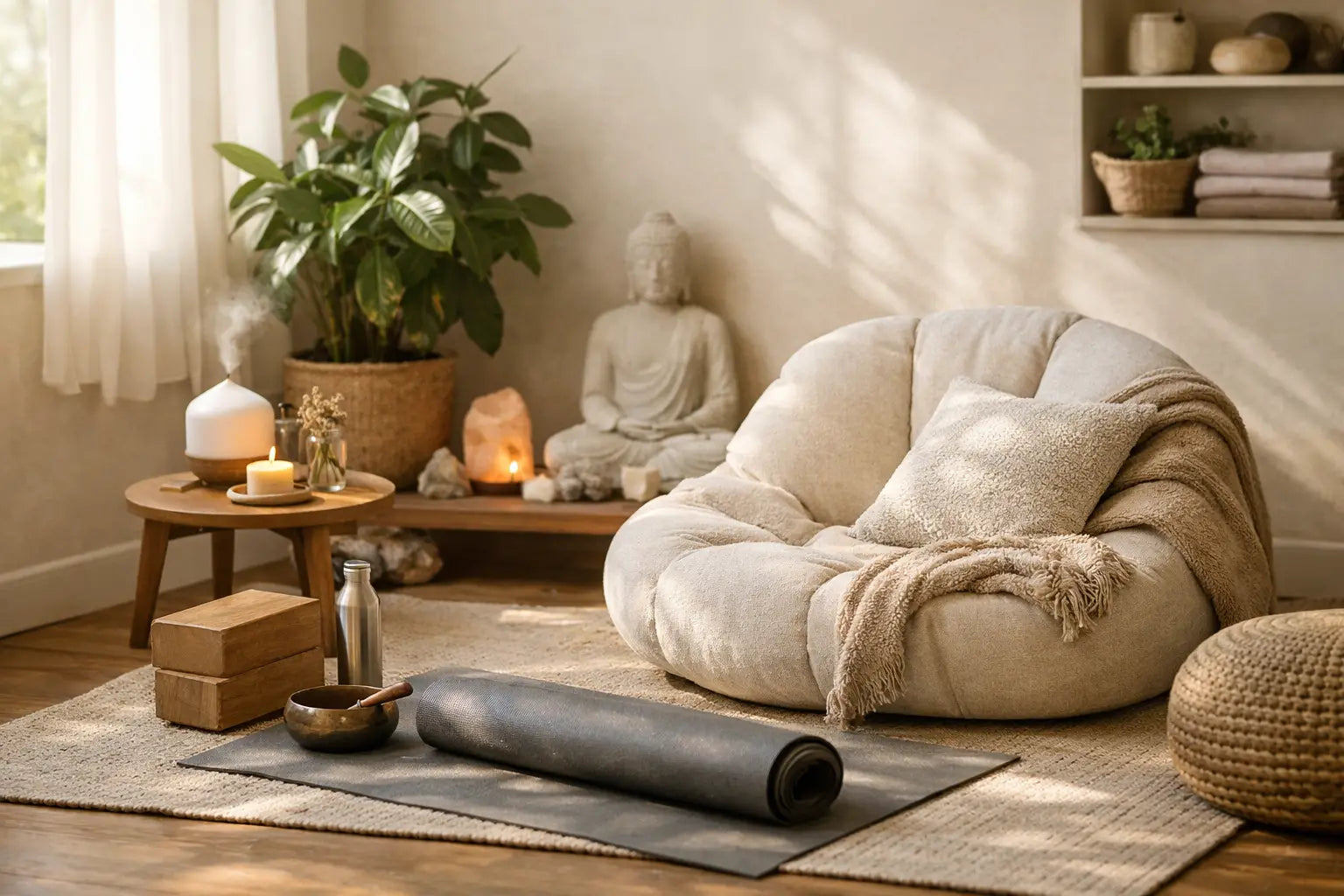
Your recovery routine does not need a spare room, a contractor, or a spa-sized budget. If you have one quiet corner, a little floor space, and a clear reason for using it, you already have what you need to learn how to create a recovery corner that fits real life.
The goal is simple: make recovery easy enough that you actually do it. When your yoga mat is buried in a closet and your massage tools are scattered across the house, recovery becomes one more task to postpone. A dedicated corner changes that. It turns stretching, mobility work, red light sessions, and post-workout reset time into part of your daily flow instead of an occasional extra.
Why a recovery corner works
A good recovery corner removes friction. That matters more than most people think. You are much more likely to spend ten minutes taking care of your body when the setup is already waiting for you.
It also helps you connect recovery to results you care about. Better mobility, less tension, calmer evenings, improved posture, and a more consistent wellness routine all start with repetition. The easier the habit feels, the more likely it is to stick.
This is also where home wellness becomes practical, not just aspirational. You do not need a perfect aesthetic setup. You need a space that supports how you want to feel - looser, calmer, stronger, and more restored after long workdays, hard workouts, or too much time sitting.
How to create a recovery corner that you will actually use
Start with location, not products. The best spot is the one you can access without rearranging your life. That could be part of your bedroom, a section of your living room, an office nook, or even an unused corner near your workout area.
Privacy helps, but convenience matters more. If the most private area in your home is also the place you never go, it is probably the wrong choice. Pick a spot that feels calm enough to relax in and close enough to your daily routine that using it feels natural.
Once you choose the space, think about what kind of recovery you want there. Some people want a calm place to stretch and unwind at night. Others want a more energizing setup for post-workout recovery, mobility, and cold therapy. Some want both. There is no single right formula, but there should be a clear purpose.
If your main goal is muscle relief, prioritize floor space, support tools, and easy cleanup. If your focus is skin, relaxation, and self-care, lighting and comfort may matter more. If you want one corner to do everything, keep it flexible and uncluttered.
Choose the essentials first
The strongest recovery spaces are built around a few tools you will use often. Start small and build from there.
A mat is usually the anchor. It defines the space and gives you a clean, comfortable surface for stretching, mobility drills, breathwork, or light bodyweight recovery work. Add one or two support pieces like a foam roller, massage ball, yoga block, or resistance band depending on your needs.
Then consider recovery tools that match your routine. A red light therapy device can make sense if you want a low-effort way to support recovery and relaxation at home. Cold therapy tools fit well if you love an energizing reset after training or long days. If your recovery corner also doubles as a beauty and self-care space, skin-focused wellness tools can belong there too - as long as the area still feels organized and intentional.
This is where many people overbuy. A packed corner full of gear can feel motivating at first, but it often becomes visual noise. Choose tools that solve a specific problem you have right now, not every problem you might have later.
Set the mood without making it complicated
Your recovery corner should feel different from the rest of your home, even if it is only a few feet wide. That shift helps your brain slow down and recognize that this is a place to reset.
Lighting makes a big difference. Soft, warm light tends to work better than harsh overhead bulbs, especially if you plan to use the space in the morning or evening. A small lamp, a clean surface, and a neutral color palette can do more than an expensive makeover.
Comfort matters too. Keep a towel, small pillow, or folded blanket nearby if you like extra support during stretching or floor work. If you use cold therapy or red light devices, think about what will make those sessions easier to repeat. A nearby chair, a hook for towels, or a basket for accessories can keep the experience smooth.
Scent, sound, and temperature are optional, but helpful if they support your habits. Some people love calming music and a diffuser. Others want total quiet and fresh air. It depends on what helps you stay consistent.
Keep your recovery corner easy to maintain
If the space is hard to reset, it will stop feeling useful. The best recovery corners are simple to put back in order in under two minutes.
Use a small basket, shelf, or bin to store your most-used items. Keep surfaces as clear as possible. If every tool is visible all the time, the space can start to feel crowded fast, especially in a bedroom or living area.
It also helps to think in zones. Floor tools stay together. Beauty or skin devices stay together. Towels and cleaning items stay together. This does not need to look like a showroom. It just needs to be easy to use and easy to tidy.
If you share your home with family, roommates, or kids, a portable setup may work better than a permanent one. In that case, your recovery corner can still live in one spot, but some tools may need to go into a storage bin or cabinet between sessions.
Match the space to your real routine
The smartest answer to how to create a recovery corner is not to copy someone else's setup. It is to build around your actual schedule.
If mornings are your only quiet time, create a space that supports a quick 10-minute routine. That may mean a mat, mobility band, and a device that is easy to switch on before work. If evenings are when your body feels stiff and your mind is still racing, make the corner more calming and lower effort.
You should also be honest about how much space you want recovery to take up in your life. A small daily practice often works better than an elaborate weekly routine you keep skipping. Five to fifteen minutes is enough to make a corner feel worthwhile if you use it consistently.
A good test is this: can you walk into the space and start within 30 seconds? If the answer is no, simplify something.
What to include based on your goals
If you want better mobility, build your corner around movement. Make room for stretching, keep supportive tools within reach, and leave enough open floor space to move comfortably. If your focus is workout recovery, think about how your body feels after training. You may want tools that help with muscle tension, cooldowns, and circulation support.
If your goal is stress relief, the environment matters more. Go lighter on equipment and stronger on comfort. A calm visual setup, soft lighting, and a few trusted tools may be all you need.
If you care about both recovery and appearance, combine body and skin wellness in a way that still feels clean and focused. That mix makes sense for a modern at-home routine because feeling good and looking refreshed often go hand in hand.
Best Fit & Healthy speaks to that kind of routine well - one where movement, recovery, and self-care are not separate projects, but part of the same lifestyle.
Mistakes that make recovery corners less effective
The biggest mistake is making the space too ambitious. If your corner needs a full reset every time you use it, it becomes easier to ignore. The second mistake is filling it with products before you know your pattern. Start with the basics, use them for a few weeks, and then upgrade with purpose.
Another common issue is choosing style over comfort. A beautiful setup is great, but not if the mat is too thin, the lighting is too harsh, or the tools are annoying to reach. Your recovery corner should look good enough to invite you in and work well enough to keep you coming back.
Finally, do not expect the space to do the work for you. The corner is a cue, not a cure. Its real value comes from helping you return to your routine more often.
A recovery corner is one of the easiest upgrades you can make to your home wellness routine because it asks for very little and gives back a lot. Start with one space, one clear purpose, and a few tools you trust. When recovery feels easy to begin, it stops feeling optional - and that is when your routine starts to change how you move, rest, and feel each day.
Share:
Face Roller vs Gua Sha: Which One Fits?
7 Best Tools for Neck Tension Relief