
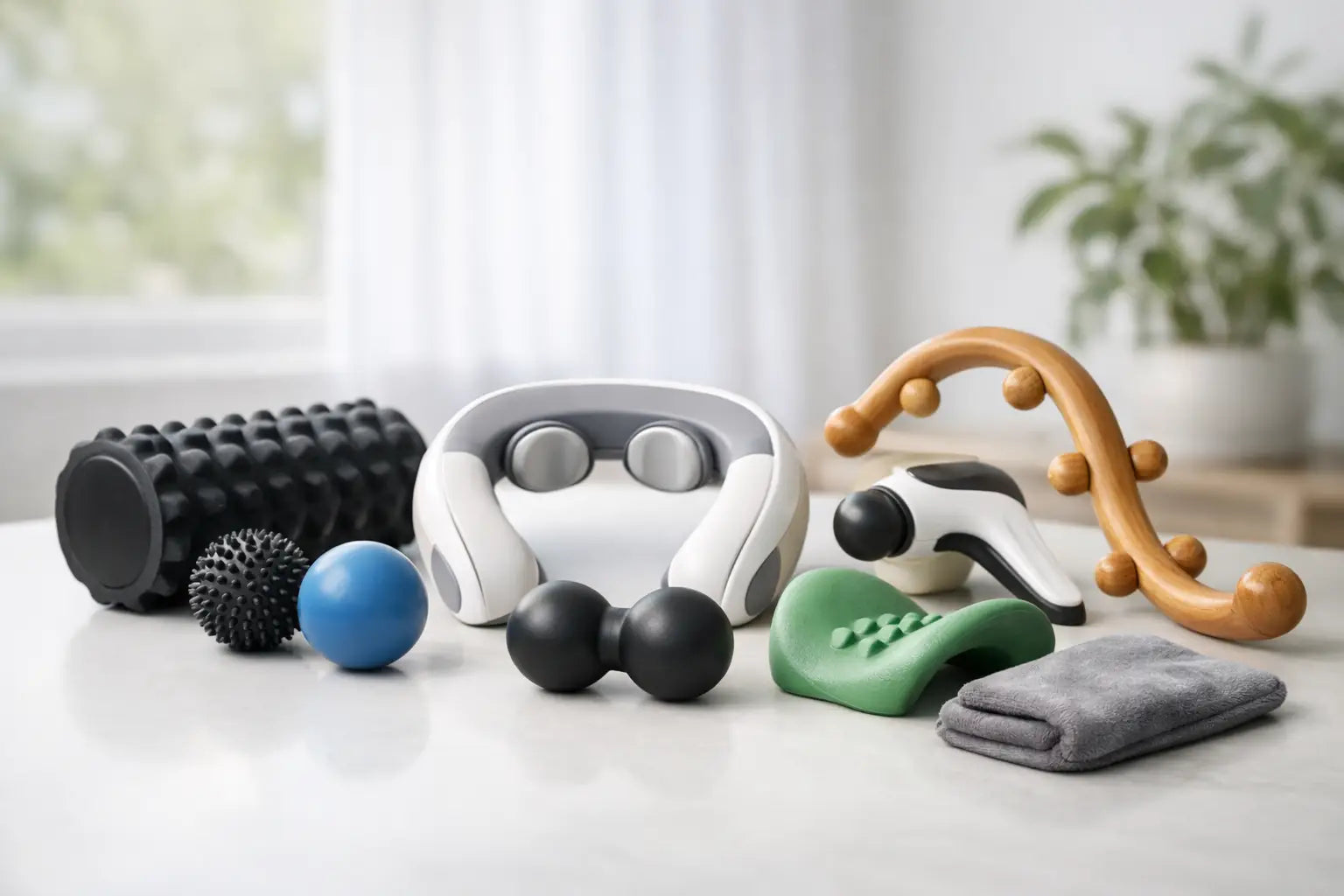
Neck tension has a way of showing up right when you feel busiest - after a long laptop session, a tough workout, a stressful week, or even a bad night of sleep. If you are looking for the best tools for neck tension, the goal is not to buy everything at once. It is to choose the tools that fit your routine, your comfort level, and the kind of relief you actually want to feel at home.
Some people need quick muscle release after workouts. Others want a calming evening ritual that helps them unwind and improve posture over time. The right tool depends on whether your tension feels sharp, stiff, achy, stress-related, or tied to your upper back and shoulders. That is why a smart home wellness setup works better than a one-size-fits-all fix.
What actually helps neck tension at home
Most neck tension comes from a mix of muscle tightness, posture habits, stress, and limited movement. Sitting with your head pushed forward, clenching your jaw, or training hard without enough recovery can all feed into that tight, heavy feeling around the neck and shoulders.
The most effective tools usually do one of three things. They help relax tight tissue, improve circulation and warmth, or support better alignment and mobility. The strongest results often come from combining those benefits instead of relying on a single device.
Best tools for neck tension and everyday recovery
1. Heated neck wraps
If your neck feels stiff and guarded, heat is often the fastest way to make it feel more comfortable. A heated neck wrap brings warmth directly to the area and can help tight muscles soften up enough for gentle stretching or movement.
This is one of the easiest options to use consistently because it feels good, requires almost no learning curve, and fits naturally into an evening routine. It is especially helpful for desk workers, anyone dealing with stress-related tightness, and people who wake up feeling stiff.
The trade-off is that heat feels soothing, but it does not actively release deeper trigger points on its own. It works best as a first step before mobility work or massage.
2. Massage guns with soft attachments
A massage gun can be a strong choice when tension extends from the upper traps into the shoulders and upper back. Used carefully, it can help loosen the surrounding muscles that often pull on the neck and create that heavy, compressed feeling.
The key word is carefully. The neck itself is a sensitive area, so most people should avoid aggressive use directly on the front or sides of the neck. Instead, focus on the upper back, traps, and the muscles around the shoulder blades using a softer attachment and lower speed. For fitness-minded users, this is one of the most practical recovery tools because it supports both post-workout relief and daily tension management.
If you prefer deep pressure, a massage gun may feel more effective than passive heat. If you are very sensitive or easily overstimulated, it may feel too intense.
3. Acupressure mats and pillows
For neck tension that is tied to stress, poor sleep, or full-body tightness, an acupressure mat with a neck support pillow can be surprisingly useful. You lie back, let the pressure settle in, and give your body time to relax.
This tool is less about aggressive muscle work and more about helping your system downshift. Many people find that once their shoulders stop creeping up toward their ears, the neck finally gets a chance to let go. It is also a strong fit for anyone building a self-care routine that feels restorative, not just corrective.
The catch is that acupressure has an adjustment period. The sensation can feel sharp at first, especially if you are tense or have sensitive skin. Start with short sessions and build gradually.
4. Foam rollers and upper back mobility tools
A lot of neck tension is really an upper back problem in disguise. When the thoracic spine gets stiff and the shoulders round forward, the neck often has to work harder to hold your head up all day. That is where a foam roller or targeted mobility tool becomes valuable.
Rolling the upper back and opening the chest can reduce the load on the neck without putting direct pressure on a delicate area. This is one of the best options for people who sit often, work from home, or notice their posture getting worse by the end of the day.
It also pairs well with yoga, Pilates, and strength training because it supports movement quality, not just temporary relief. The main limitation is that it takes a little consistency. You may not get instant results from one session, but over time it can make a real difference.
5. Neck stretchers and cervical support tools
Some at-home neck stretchers are designed to gently support the natural curve of the neck while you lie down and relax. These can help if your tension feels connected to posture, compression, or hours spent looking down at screens.
When they work well, they offer a light decompression effect and encourage the neck to settle into a better position. That can feel especially good after travel, desk work, or repetitive forward-head posture.
This category requires a bit more caution than others. More is not better. If a device feels too intense, pushes your neck into discomfort, or leaves you sore afterward, it is not the right fit. Gentle support usually beats aggressive stretching here.
6. Red light therapy devices
Red light therapy is a strong match for people who want a recovery tool that feels easy to integrate into daily life. Used consistently, it can support circulation, relaxation, and muscle recovery, which makes it appealing for both tension relief and broader wellness goals.
For neck tension, red light therapy is often less about immediate deep-pressure release and more about creating a calm, recovery-focused environment for the tissues around the neck, shoulders, and upper back. It fits especially well for people who already value at-home wellness routines and want one tool that supports recovery beyond just one body part.
If your tension is intense and you want instant pressure-based relief, this may not replace massage. But as part of a layered routine, it brings a premium, low-effort option that feels modern and practical.
7. Supportive pillows for sleep recovery
If your neck always feels worse in the morning, your daytime routine may not be the only issue. A supportive pillow can make a major difference by keeping your neck in a more neutral position while you sleep.
This is not the most exciting purchase, but it may be one of the most important. Side sleepers, back sleepers, and people who switch positions all need slightly different pillow height and support. The best choice is the one that keeps your head from dropping too low or tilting too high.
Unlike a massage tool, a pillow will not create an immediate sense of release. What it can do is remove one of the biggest reasons your neck keeps getting irritated in the first place.
How to choose the best tools for neck tension
Start with the feeling you want to change. If your neck feels hard and stiff, heat and gentle support are often the easiest entry point. If it feels knotted and workout-related, a massage gun and upper back mobility work may be more effective. If stress is driving the problem, acupressure and calming recovery tools usually make more sense than intense pressure.
It also helps to think in terms of habits, not just products. The best tool is the one you will actually use three or four times a week. A heated wrap that becomes part of your evening routine may do more for you than an advanced device that stays in a drawer.
For many people, the sweet spot is a small combination: one tool for immediate relief, one for mobility or posture, and one for daily recovery. That creates a more complete system without overcomplicating your routine.
A simple routine that works
If your goal is to feel better fast and build better habits, keep it simple. Start with 10 minutes of heat or red light therapy to help the area relax. Follow that with light upper back mobility or gentle use of a massage tool on the traps and shoulders. Finish with a supportive pillow at night or a few quiet minutes on an acupressure mat if stress is part of the picture.
That kind of routine does not take long, but it supports the bigger goal: moving better, recovering faster, and feeling more comfortable in your body every day. Best Fit & Healthy is built around that idea - practical wellness tools that fit real life and help you create a home routine you will actually stick with.
If neck tension keeps coming back, do not just chase stronger pressure. Choose tools that help your body relax, align, and recover, and you will usually get better results that last.
Share:
How to Create a Recovery Corner at Home
Can LED Masks Help Acne? What to Expect