
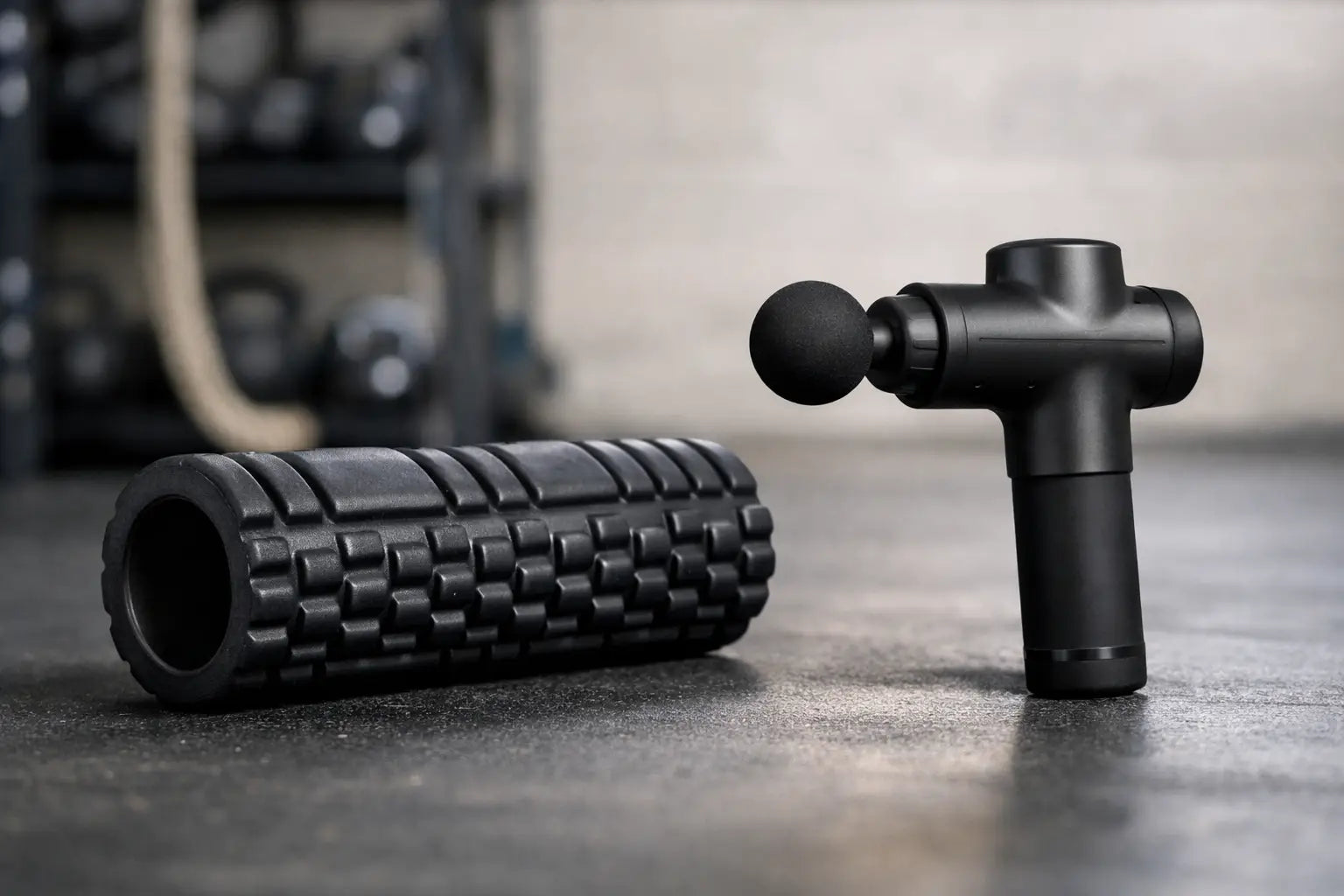
A hard workout, a long desk day, or even an intense yoga class can leave your body feeling stiff in ways that stretch alone does not fix. That is where the foam roller vs massage gun question gets real. Both tools promise better recovery, less tension, and more freedom of movement, but they work differently and fit different routines.
If you are building an at-home wellness setup, this is less about picking a trendy gadget and more about choosing the tool you will actually use. The best recovery tool is the one that matches your body, your schedule, and the kind of relief you want most often.
Foam roller vs massage gun: the real difference
A foam roller uses your body weight to apply broad pressure across larger areas like your calves, quads, hamstrings, glutes, upper back, and lats. It is simple, effective, and especially useful for people who want to combine muscle release with mobility work. When you roll slowly, you are not just pressing into tissue - you are also moving joints through range and teaching your body to relax into that position.
A massage gun works through rapid percussive pressure. Instead of broad contact, it delivers more targeted stimulation to specific muscles and tight spots. It is usually easier to use on sore areas without having to get down on the floor, and it can feel more convenient when you want fast relief before or after a workout.
So when people ask which one is better, the honest answer is that they solve different problems. A foam roller is great for full-body maintenance and mobility. A massage gun is great for targeted relief and quick, low-effort recovery.
When a foam roller makes more sense
A foam roller shines when tightness is spread across a larger area rather than locked into one exact point. If your quads feel heavy after lower-body training, your upper back gets stiff from sitting, or your calves feel dense after running, rolling can help you cover more surface area in less time.
It is also a strong choice if mobility is part of your goal. Rolling the thoracic spine before upper-body training or opening up the hips before Pilates can make movement feel smoother. Many people like that a foam roller naturally pairs with stretches, breathing, and warm-up drills, so it becomes part of a routine instead of a quick fix.
There is also a body-awareness benefit. Because you control pressure with your own weight and position, rolling can help you notice asymmetries, extra-sensitive spots, and patterns of tension that build up from daily habits.
The downside is that foam rolling takes more effort. You need floor space, a little patience, and some willingness to support your body while you shift around. For some people, especially beginners, it can feel awkward or intense at first.
When a massage gun is the better pick
A massage gun is often the easier tool to stick with because it asks less from you physically. You can use it standing up, sitting down, or while winding down at the end of the day. If convenience matters, that is a real advantage.
It also works well when you want to target a smaller area with more precision. Think knots around the shoulders, tight hip flexors, sore glutes, or calves that need attention after long walks or training. A massage gun can reach these spots without requiring you to position your whole body around the tool.
For many people, it fits modern life better. You can use it for a few minutes before a workout to wake up the body, or after training to help muscles feel less guarded. It is especially appealing if you want recovery to feel efficient rather than time-consuming.
The trade-off is that it does not replace movement work. It may help a muscle feel looser, but it does not naturally build the same mobility flow that comes with rolling and stretching. It can also be too intense if you use too much pressure or hold it on one sensitive spot for too long.
Foam roller vs massage gun for soreness, mobility, and tension
For general muscle soreness, both can help. If soreness is widespread, a foam roller usually makes more sense. If it is pinpointed or you want quick relief, a massage gun is often more practical.
For mobility, the foam roller usually has the edge. It supports longer passes over larger muscle groups and blends well with stretching, activation, and movement prep. If your goal is to move better during workouts or feel less stiff throughout the day, this matters.
For tension relief and convenience, the massage gun often wins. It is faster to grab, easier to use on your own, and better for the kind of quick reset that fits between meetings, errands, or evening routines.
For sensitivity, it depends. Some people prefer the broad pressure of a roller because it feels more steady and controlled. Others find a massage gun easier because they can keep the session short and avoid loading full body weight onto a tender area.
Which tool is better before a workout?
Before a workout, a massage gun is often the simpler choice if you want to get muscles warm and responsive without spending a lot of time on the floor. A minute or two on the calves, quads, glutes, or shoulders can help your body feel more ready to move.
That said, a foam roller can be excellent before training if your warm-up already includes mobility work. Rolling the upper back before strength training or the hip area before lower-body work can help you move into positions more comfortably.
The better pre-workout option depends on your style. If you want speed, go with the massage gun. If you want a more complete movement prep session, the foam roller fits better.
Which tool is better after a workout?
After training, both tools can earn a spot in your recovery routine. A foam roller is useful when your whole lower body or upper body feels worked over and you want a slower, more grounding reset. It encourages you to spend a little more time with recovery instead of rushing through it.
A massage gun is ideal when you want low-effort relief. You can use it while cooling down, later in the evening, or the next morning when stiffness starts to show up. That ease makes it more realistic for busy schedules, which matters because consistency usually beats the perfect method.
What if you only want one?
If you are choosing just one tool, think about your habits more than the specs. A foam roller is a smart buy if you enjoy structured workouts, yoga, Pilates, mobility sessions, or floor-based recovery. It gives you more versatility for movement-focused routines and usually costs less.
A massage gun is a strong choice if you want fast, targeted relief and know you are more likely to use something that feels convenient. If your life is full, your muscles are often tight, and you want recovery to be simple, it may be the better fit.
For many at-home wellness routines, the massage gun feels easier to maintain while the foam roller feels more foundational. One supports quick recovery. The other supports recovery plus mobility. Your answer depends on which benefit you value more right now.
The best case: using both together
This is one of those categories where the real upgrade may not be either-or. A massage gun and foam roller can complement each other surprisingly well.
You might use a massage gun first on especially tight areas to reduce guarding, then follow with a foam roller to work through a larger muscle group and move into stretching. Or you might roll before a workout and use the massage gun later that night for a more relaxing reset.
That combination supports the kind of balanced, at-home routine more people want now - practical, effective, and easy to repeat. It is also a good match for a broader self-care mindset, where performance, comfort, posture, and daily recovery all matter.
How to choose the right fit for your routine
If your main goal is mobility, posture support, and full-body muscle maintenance, start with a foam roller. If your main goal is quick relief, convenience, and targeted recovery, start with a massage gun.
If you are newer to recovery tools and want the least friction, a massage gun may be easier to use consistently. If you already enjoy recovery sessions as part of your workout or wellness practice, a foam roller can give you more range.
The good news is that neither choice is wrong. Both can help you move better, recover faster, and feel stronger every day when they fit naturally into your routine. At Best Fit & Healthy, that is really the point of any wellness tool - not to make your life more complicated, but to make feeling good at home a little easier.
Choose the tool that fits the way you actually live, and your body will thank you for the consistency.
Share:
Complete Guide to Home Wellness
How to Relieve Sore Muscles Fast