
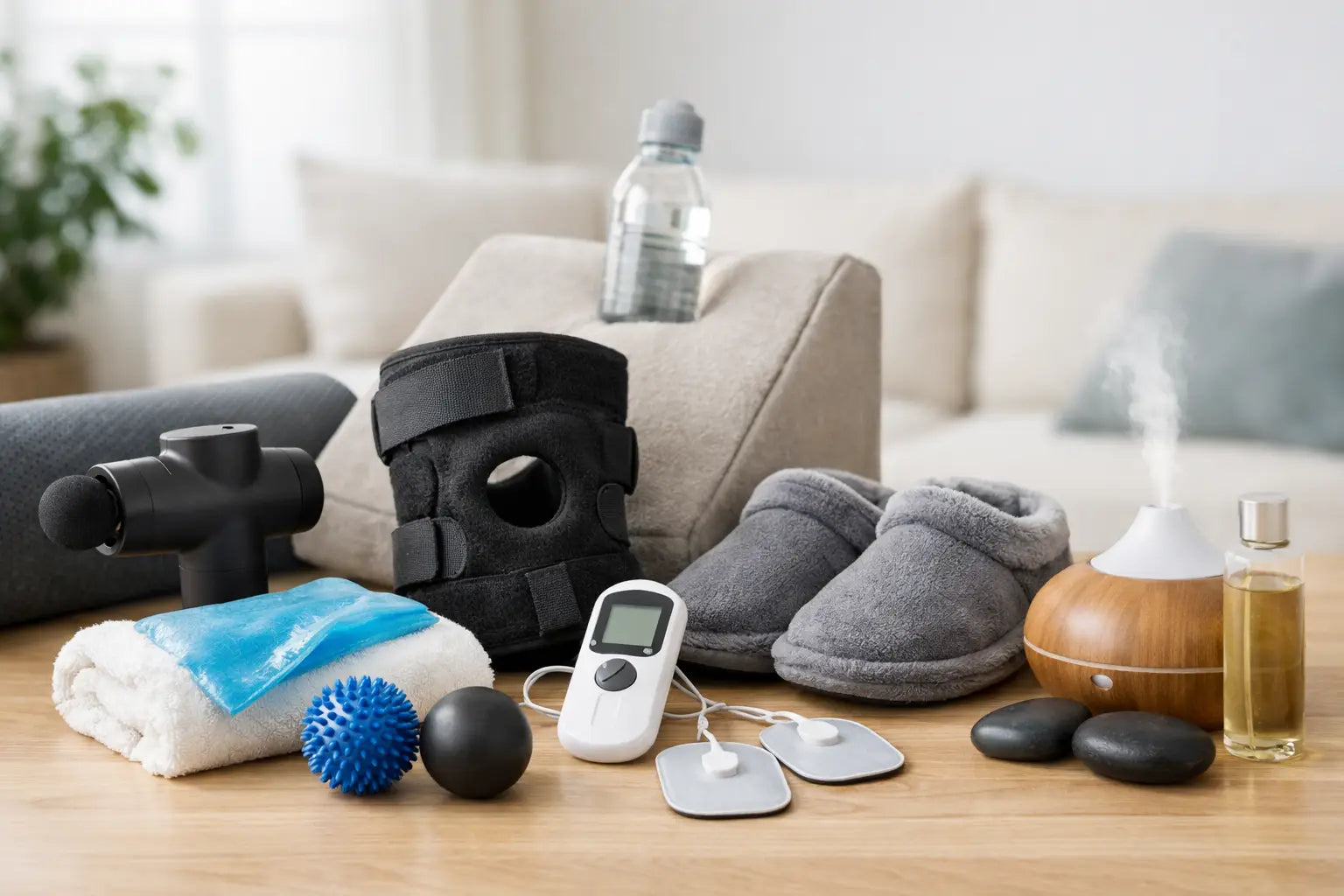
A hard workout, a long day at your desk, or even a tough night of sleep can leave your body feeling off the next morning. The best home recovery accessories help close that gap between how you feel and how you want to feel - looser, stronger, more mobile, and more ready for the day. The real win is not turning your home into a clinic. It is choosing a few smart tools you will actually use consistently.
Home recovery works best when it fits your life. That means accessories that support sore muscles, joint mobility, circulation, stress relief, and even skin wellness without adding friction to your routine. If a product feels complicated, bulky, or too niche, it usually ends up in a drawer.
What makes the best home recovery accessories worth buying
The best recovery tools are practical, easy to store, and simple to use even when you are tired. They should help you recover faster, but they also need to fit into real life - ten minutes after a workout, five minutes before bed, or a quick reset between meetings.
That is why the best home recovery accessories usually do one of three things very well. They reduce tension, improve circulation and mobility, or help your body shift into a more relaxed state. Some go a step further by supporting skin health and daily self-care, which matters more than people think. When you feel better physically, it is easier to stay consistent with workouts, movement, and healthy habits.
Price matters too, but value matters more. A premium tool you use four times a week can be a better buy than a cheaper one that feels inconvenient. The right accessory should earn its place in your routine.
Best home recovery accessories for daily use
Foam rollers
Foam rollers stay popular for a reason. They are one of the easiest ways to target tight quads, calves, glutes, upper back, and lats at home. If you deal with post-workout soreness or stiffness from sitting, a few minutes of rolling can help you move more freely.
The trade-off is comfort. Firmer rollers usually provide deeper pressure, but they can feel intense if you are new to recovery work. Softer rollers are more approachable, though they may not give enough pressure for athletes or anyone with stubborn tightness. If you want one tool that covers a lot of ground, this is still a strong place to start.
Massage guns
Massage guns are a favorite because they make recovery feel fast and effective. They work well for spot treatment, especially on the shoulders, hamstrings, glutes, and calves. They are also useful if you want targeted relief without having to get on the floor.
What matters most here is control. A device with multiple speed settings and attachments gives you more flexibility based on how your body feels that day. Stronger is not always better. If a massage gun is too aggressive, it can make sensitive areas feel worse instead of better.
Mobility balls and massage balls
These small tools are easy to underestimate, but they are some of the most effective accessories for focused pressure. They are great for feet, hips, chest, and around the shoulder blades - the kind of places a foam roller cannot always reach well.
They also store easily, which makes them ideal for people building a low-clutter recovery setup. The only downside is that they require a bit more patience and body awareness. They are less passive than a massage gun, but often more precise.
Resistance bands for recovery movement
Resistance bands are not just for strength training. They are excellent for warm-ups, light activation, stretching, and restoring movement after hard training days. If your goal is to move better, not just feel less sore, bands deserve a spot in your routine.
They are especially helpful for hips, glutes, shoulders, and posture-focused work. The benefit here is versatility. The downside is that they work best when you know a few basic movement patterns, so consistency matters more than intensity.
Accessories that support deeper recovery at home
Red light therapy devices
Red light therapy has become one of the most appealing at-home wellness tools because it supports recovery while fitting naturally into daily life. People often use it to help with muscle recovery, joint comfort, and skin appearance, which makes it more versatile than many single-purpose accessories.
This is one of those categories where convenience really matters. A device that is easy to position and use regularly tends to deliver more value than one with impressive specs but poor usability. It also helps that red light therapy blends fitness recovery and beauty-focused self-care, which makes it a natural fit for a more complete wellness routine.
Cold therapy tools
Cold recovery is not only for elite athletes. At-home cold therapy can help reduce that heavy, inflamed feeling after intense workouts, long runs, or high-volume training weeks. Depending on your setup, this might mean a cold plunge option, ice-based tools, or compact equipment designed for targeted cooling.
The biggest trade-off is commitment. Cold therapy can be highly effective, but it asks more of you than most accessories. It is not always the most comfortable option, and some people love it while others never stick with it. If you respond well to it, though, it can become a powerful part of your recovery rhythm.
Heating pads and heat-based relief tools
When your body feels stiff rather than inflamed, heat can be the better choice. Heat-based tools are useful for loosening up the lower back, neck, shoulders, and hips. They are also great on rest days or before mobility work.
This category works well for people whose discomfort comes more from tension and tightness than from hard training soreness. Heat will not replace movement, but it can make movement feel more accessible, which is often the first step that matters most.
Recovery is not just muscles
Yoga mats and supportive floor essentials
Not every recovery accessory needs to be high-tech. A quality yoga mat can quietly become one of the most-used pieces in your home wellness setup. It gives you a clean, comfortable space for stretching, breathwork, Pilates, mobility sessions, and post-workout cool-downs.
If you are trying to build a sustainable routine, environment matters. When your setup feels inviting, you are more likely to use it. This is part of why simple accessories often outperform flashy ones over time.
Posture and stretching tools
Posture-focused accessories, stretching straps, and alignment tools can be especially helpful if your recovery challenges come from modern life as much as exercise. Tight hip flexors, rounded shoulders, and upper back tension are common whether you train hard or just spend too much time sitting.
These tools are usually most effective when used consistently in short sessions. They are not quick fixes, but they support the kind of daily maintenance that keeps small issues from becoming bigger ones.
Skin and facial recovery tools
Recovery at home has expanded beyond sore muscles, and that is a good thing. Facial tools and skin-focused devices can support circulation, relaxation, and a more refreshed appearance, especially when your routine includes stress, workouts, sweat, and not enough sleep.
For a lot of people, this category makes wellness feel more complete. You are not just recovering from exercise. You are taking care of how your body feels and how you feel in your own skin. That mindset tends to create better long-term habits because it connects performance, appearance, and everyday confidence.
How to choose the right accessories for your routine
The smartest way to shop is to match the tool to your real habits, not your idealized version of yourself. If you know you want quick relief after training, a massage gun or foam roller may make more sense than a larger setup that requires planning. If you enjoy longer wellness sessions, red light therapy or cold recovery may feel worth the investment.
It also helps to think in layers. One tool for tension relief, one for mobility, and one for broader wellness is often enough for a strong home setup. For example, a foam roller, resistance bands, and a red light therapy device can cover a lot without making your routine complicated.
If space is limited, smaller tools like mobility balls, bands, and compact beauty or recovery devices may be the better fit. If you are building a more premium setup, you might want accessories that create a true recovery corner at home. Best Fit & Healthy speaks to that kind of lifestyle well - practical wellness tools that help you move better, recover faster, and feel stronger every day.
A smarter way to build your recovery space
You do not need every trending product to feel a difference. The best home recovery accessories are the ones that make your body feel supported and your routine easier to keep. Start with what solves your biggest friction point - soreness, stiffness, stress, poor mobility, or skin fatigue - and build from there.
A home wellness routine should feel like something you can return to, not something you have to force. When your recovery tools fit your life, taking care of yourself becomes a lot more natural.
Share:
Red Light Therapy vs Infrared Explained
How Skin Tightening Beauty Devices Fit Daily Life