
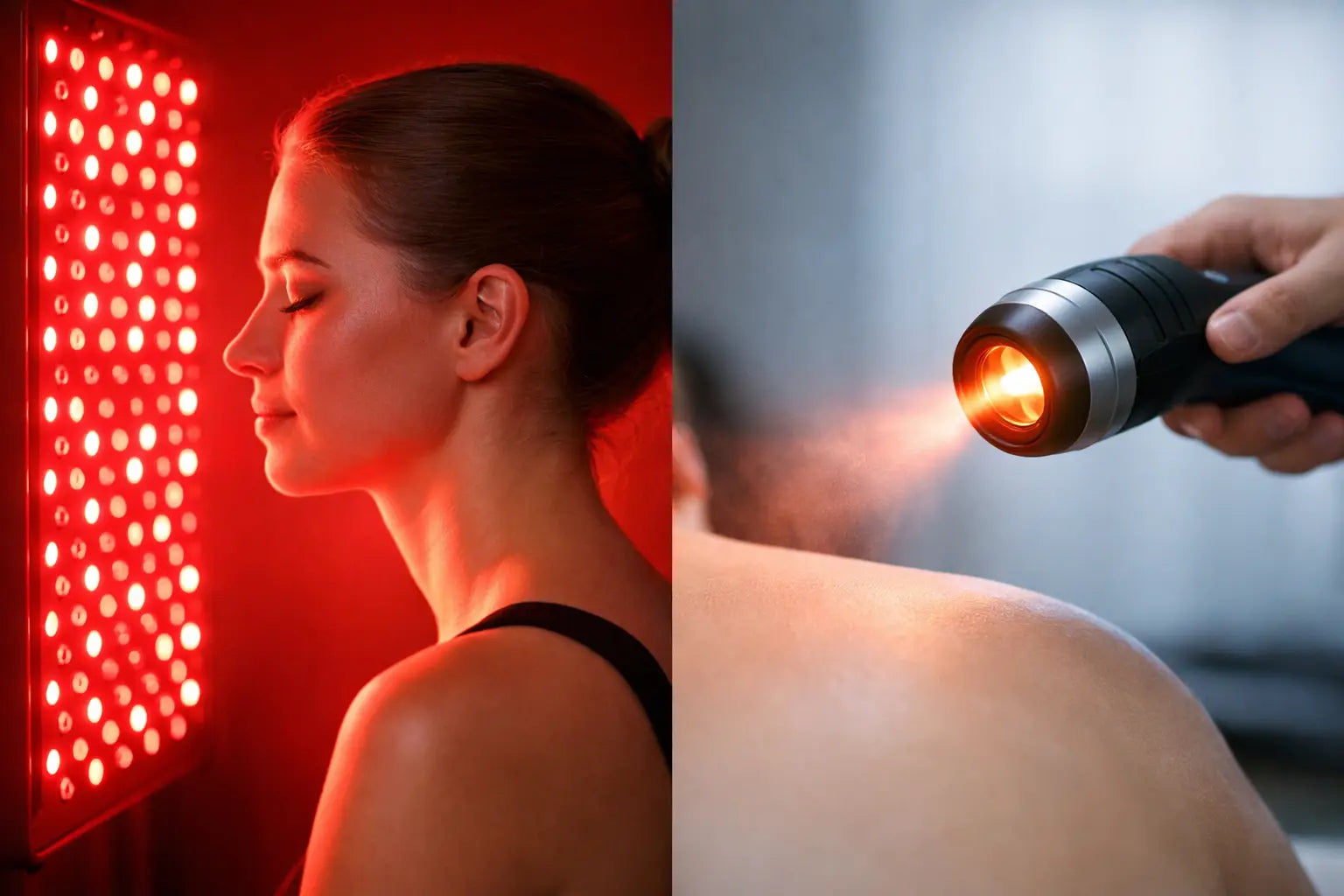
If you have been comparing wellness tools for skin, soreness, or recovery, you have probably run into the same confusing question: red light therapy vs infrared. The two are often grouped together, sometimes labeled the same way, and often marketed with overlapping benefits. That can make shopping harder than it needs to be.
The simple version is this: red light and infrared are both forms of light therapy, but they work a little differently in the body. One is more closely tied to surface-level concerns like skin appearance, while the other is often chosen for deeper support related to muscles, joints, and recovery. The best option depends on what you want your routine to do for you.
Red light therapy vs infrared: what is the difference?
Red light therapy uses visible red wavelengths. You can see the light, and it is commonly used in beauty and wellness routines aimed at supporting the skin, boosting a healthy-looking glow, and helping people maintain a more consistent self-care ritual.
Infrared light sits beyond the visible spectrum. You cannot see it the same way you see red light. In at-home wellness products, this usually means near-infrared, which is often paired with red light in the same device. Near-infrared is generally chosen for how it may reach deeper into tissue, which is why it gets attention for post-workout recovery, tension, and everyday aches.
That is the core difference. Red light is visible and often associated with skin-focused use. Infrared is invisible and more often associated with deeper recovery support. They are related, but they are not identical.
Why the comparison gets confusing
A lot of devices combine both technologies. That is great for convenience, but it also blurs the line for shoppers trying to understand what they are actually buying. A product may be marketed as red light therapy even when it includes infrared. Another may emphasize infrared while also offering visible red wavelengths.
That overlap is not necessarily a problem. In fact, many people benefit from both. The confusion comes from assuming they do the exact same job. They do not. They can complement each other, but your goals should guide your choice.
When red light therapy makes more sense
If your focus is skin, red light therapy is usually the more obvious starting point. People often use it as part of a beauty or self-care routine to support smoother-looking skin, a more refreshed appearance, and a healthy-looking complexion.
It also tends to fit easily into everyday habits. If you already have a morning skincare routine or an evening wind-down routine, a red light device can feel like a natural add-on. That matters more than it may seem. The best wellness tool is often the one you will actually use consistently.
Red light can also appeal to people who are less interested in intense recovery tools and more interested in gentle daily support. If your goals are centered on appearance, relaxation, and easy habit-building, it is a strong option.
When infrared may be the better fit
Infrared often stands out for people who are focused on recovery and physical comfort. If you work out at home, spend long hours at a desk, deal with post-exercise tightness, or simply want more support for sore areas, infrared may be the better match.
Because it is typically associated with deeper penetration, it is often used for muscles, joints, and areas of tension rather than purely cosmetic goals. That does not mean it replaces stretching, mobility work, or rest. It means it can be one more tool in a smart recovery routine.
This is where lifestyle matters. Someone training several days a week may value infrared for recovery support. Someone dealing with daily neck and shoulder tension from work may appreciate it for comfort and relaxation. Someone focused mostly on skin results may not need infrared to be the priority.
Red light therapy vs infrared for skin
If skin is your main concern, red light usually gets the spotlight. It is the option most often associated with face masks, beauty panels, and skincare-focused routines. For concerns tied to tone, texture, and overall radiance, red light tends to be the first thing people look for.
Infrared can still play a supporting role, especially in combo devices, but it is usually not the headline benefit for someone shopping primarily for beauty results. If your goal is to upgrade your skincare routine at home, red light may be enough on its own.
That said, some people prefer a device with both modes because they want one tool that supports both appearance and broader wellness. If you like products that do more than one job, that can be a smart middle ground.
Red light therapy vs infrared for pain and recovery
For recovery, infrared often has the edge. This is especially true if your goals involve muscles, joints, stiffness, or post-workout support. Many active adults want tools that help them bounce back faster and stay more consistent with movement. Infrared fits naturally into that kind of routine.
Red light may still have value here, particularly in combination products, but if you are comparing the two specifically for deeper recovery needs, infrared is usually the one that gets more attention.
This is also where expectations matter. Light therapy is not a magic fix for chronic pain, major injury, or issues that need medical care. It works best as part of a broader wellness routine that might also include strength work, mobility sessions, hydration, sleep, and recovery days.
Should you choose one or both?
For many people, both is the most practical answer. A combination device gives you flexibility. You can use it as part of your skincare routine, then also lean on it after workouts or on days when your body feels tight and tired.
That said, not everyone needs every feature. If budget is a factor, start with your main goal. Choose red light if your routine is mostly beauty and skin-focused. Choose infrared if recovery, soreness, and physical tension are your top concerns.
There is no prize for buying the most advanced device if half the features do not matter to you. The better choice is the one that matches your real life.
How to choose the right device for your routine
The biggest mistake people make is shopping by trend instead of use case. Before you buy, think about where and when you will use the device. A large panel can be great for full-body support, but if you live in a small space or want something simple for your vanity or nightstand, a smaller device may fit better.
You should also think about consistency. A tool that feels easy to use will usually outperform a more complicated one that ends up sitting in a closet. If you want something for quick daily sessions, look for a design that fits naturally into your existing habits.
It also helps to be honest about your goals. If you are looking for one device to support skin, recovery, and overall wellness, a combo option may give you more value. If you want a focused beauty tool, go simpler. If you are mostly trying to support your body after training, prioritize infrared features.
For shoppers building an at-home wellness setup, this is where curated brands can make the process easier. Instead of piecing together products from different categories and hoping they work together, it helps to choose tools designed to support a full routine around recovery, movement, and self-care.
What results should you realistically expect?
Light therapy works best when you think of it as a routine, not a one-time event. A single session may feel relaxing, but the bigger value usually comes from regular use over time.
Results also vary by goal. Skin-focused users may notice changes in how their skin looks and feels with consistent use. Recovery-focused users may care more about how their body feels after workouts or long days. Neither path is instant, and that is worth remembering when you are deciding what to buy.
The upside is that these tools are easy to use at home, which makes consistency much more realistic. That convenience is a big part of the appeal. You do not need to build your week around appointments to support your wellness goals.
The better question to ask
Instead of asking which one is better overall, ask which one is better for you. Red light and infrared each bring something useful to the table. One may support your skin goals more directly. The other may fit your recovery routine more naturally. And for plenty of people, the best setup includes both.
When your wellness routine matches your real needs, it stops feeling like another task and starts becoming something you actually want to keep up with. That is where the best results usually begin.
Share:
Best At Home Anti Aging Devices
10 Best Home Recovery Accessories