
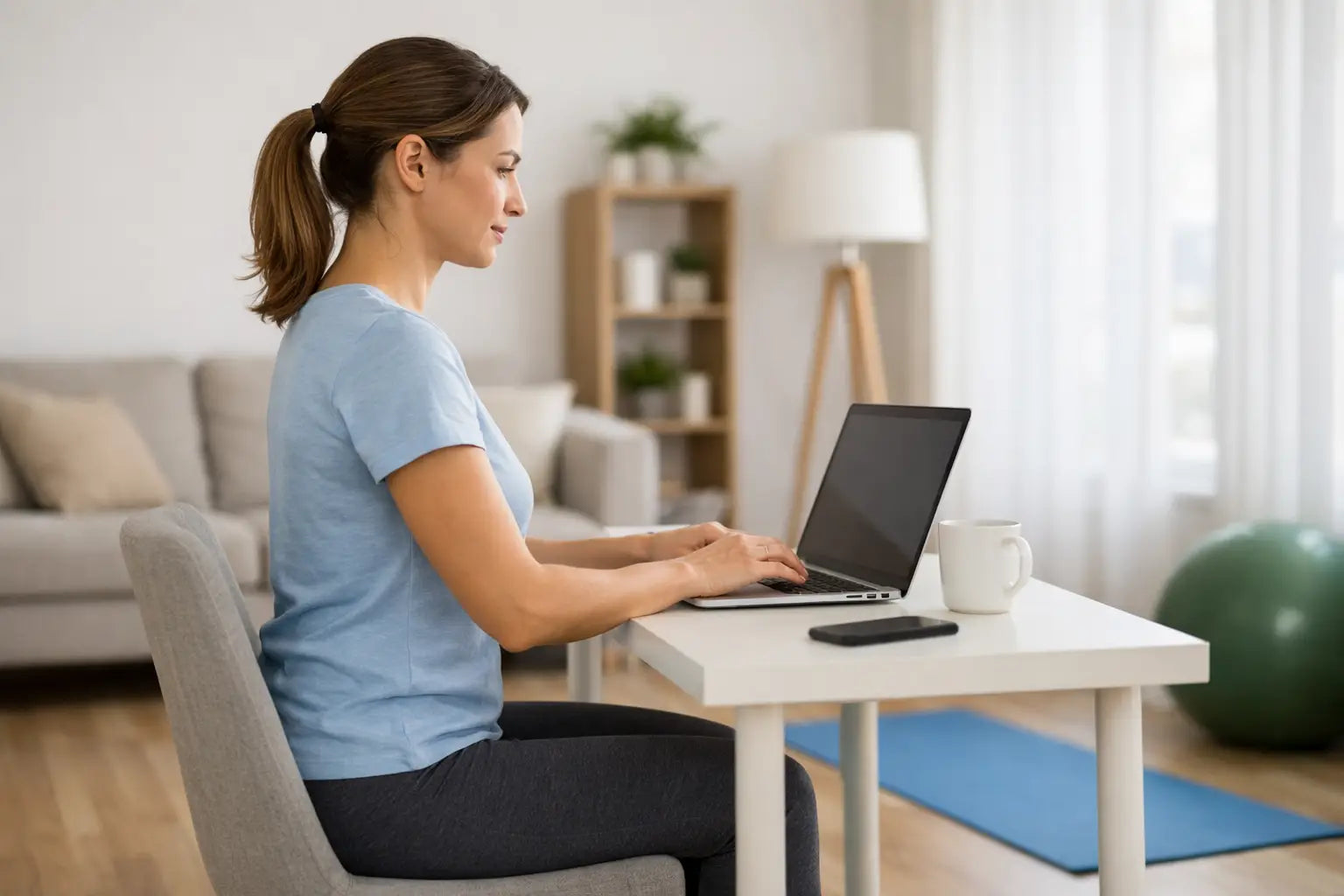
If your shoulders creep forward by noon and your lower back starts talking after a few hours at your laptop, your body is giving you useful feedback. Learning how to improve posture at home is less about forcing yourself to sit stiff and straight all day and more about building a space and routine that helps your body work with less strain.
Good posture is really about support, balance, and repeatable habits. When your ribs are stacked over your pelvis, your head is not drifting too far forward, and your muscles are sharing the workload the way they should, everyday movement feels easier. You breathe better, workouts feel cleaner, and even simple things like standing in the kitchen or scrolling on the couch can feel less draining.
Why posture slips at home
Home should feel comfortable, but comfort can turn into collapse fast. Soft couches, kitchen-counter workstations, low screens, long phone sessions, and skipped recovery all add up. Most people are not dealing with one dramatic posture problem. They are dealing with small positions repeated for hours.
That matters because posture is not just one pose. It is the shape your body falls into most often. If you spend a lot of time rounded forward, your chest may feel tight, your upper back may feel stiff, and your glutes and core may stop contributing as much as they should. On the other hand, trying to "sit up straight" all day can create a different problem if you overarch your low back and grip through your ribs.
The goal is not perfection. The goal is a body that can hold good alignment comfortably and return to it often.
How to improve posture at home without overthinking it
The fastest way to improve posture is to stop treating it like a single fix. Better posture usually comes from three things working together: a smarter setup, more movement during the day, and a little strength and mobility practice.
If one of those is missing, progress tends to stall. You can stretch your chest every night, but if your screen is still too low, your head will keep drifting forward. You can buy a supportive chair, but if you sit for four straight hours, stiffness still wins. Posture responds best when your environment and your body are on the same team.
Start with your everyday setup
Your home workspace does not need to look fancy, but it does need to stop pulling you out of alignment. The top of your screen should be close to eye level so you are not constantly looking down. Your elbows should rest around a 90-degree bend, and your feet should feel planted. If your chair is too high, use a footrest or even a stable stack of books.
The same idea applies outside your desk. If you always scroll on the couch with your neck bent, posture work has to fight that habit every night. Bring your phone up closer to eye level. Add a pillow behind your mid-back if your sofa makes you sink. When standing at the counter, shift less into one hip and try to keep weight more balanced between both feet.
Small upgrades count because they reduce how often your body has to compensate.
Build movement into your day
One of the biggest posture mistakes is staying in any position too long, even a good one. Your body likes variation. That means the answer is not to freeze in a perfect seated posture. It is to change positions before tension starts stacking up.
Set a simple rhythm. Every 30 to 60 minutes, stand up, reach overhead, walk for a minute, or do a few bodyweight squats. If you work from home, use routine anchors instead of relying on motivation. Stand during calls. Stretch while your coffee brews. Do a quick mobility reset before dinner.
These breaks do more than loosen stiff muscles. They remind your nervous system where neutral alignment actually is.
The best at-home exercises for better posture
You do not need an hour-long corrective routine. A focused 10 to 15 minutes done consistently is often more effective than a big session once a week.
Open up the front of the body
A lot of at-home posture issues come from too much time in front-flexed positions. Doorway chest stretches can help if your pecs feel tight, and a gentle hip flexor stretch can be useful if you sit often. The key is not to force range. You want a steady stretch that helps you breathe more fully, not one that makes you tense up.
Thoracic extension work is also worth your time. Lying over a yoga bolster, a rolled towel, or a supportive mobility tool can help open the upper back, which often gets stuck in a rounded position. When the upper spine moves better, the neck and shoulders usually stop trying to do all the work.
Strengthen what supports alignment
Posture improves when the right muscles can actually hold you there. For many people, that means more upper back strength, deeper core control, and stronger glutes.
Rows, band pull-aparts, wall angels, and face-pull style movements are great for the upper back and rear shoulders. Dead bugs, bird dogs, and slow marching bridges train the core without teaching you to overgrip your lower back. Glute bridges, split squats, and controlled bodyweight hinges can help reconnect the lower body to your posture, especially if you spend a lot of the day sitting.
If you practice yoga or Pilates, this is where those routines can really shine. Done well, they build body awareness and control, not just flexibility.
Train your head and neck position gently
Forward head posture is common, especially if you work on a laptop or spend a lot of time on your phone. The fix is not to yank your chin back aggressively. It is to create a softer, stacked position where your ears sit more in line with your shoulders.
Simple chin tucks, wall-supported posture drills, and breathing with the back of your ribs expanding can help. Keep the effort light. If you feel strain in the front of the neck, you are probably forcing it.
Recovery matters more than most people think
Tight, overworked muscles can make good posture feel unnatural, even when you know what to do. That is why recovery tools and recovery habits can make a real difference at home.
Gentle mobility work in the evening, foam rolling, massage tools, and heat can all help reduce the background tension that pulls you out of position. If your upper traps are always on and your chest feels locked, posture drills alone may feel frustrating. Recovery creates space for better movement.
This is where a home wellness routine becomes practical, not extra. When you pair movement with recovery, your body is more likely to hold onto the changes. At Best Fit & Healthy, that lifestyle approach is the point - tools should fit into real life and help you move better, recover faster, and feel stronger every day.
What good posture should actually feel like
Good posture does not feel rigid. It feels tall, easy, and supported. Your shoulders are relaxed, not pinned back. Your ribs are not flared. Your low back is not overly arched. You can breathe into your sides and back without feeling compressed.
That last part is a useful test. If your version of standing straight makes breathing harder, it is probably too forced.
There is also some personal variation here. The best posture for your body depends on your structure, mobility, training history, and daily demands. Someone recovering from pain may need a different approach than someone who simply wants better desk posture. If posture changes come with numbness, persistent pain, or headaches that do not improve, it is smart to get individualized guidance.
A realistic daily routine that works
If you want results, keep it simple enough to repeat. Spend two minutes setting up your workspace well in the morning. Take short movement breaks through the day. Do 10 minutes of posture-focused mobility and strength work a few times a week. Add recovery in the evening if your body feels tight and compressed.
That may not sound dramatic, but it works because it matches how posture problems actually happen - gradually. Better posture tends to improve the same way. Not through one perfect stretch or one expensive chair, but through small choices that support your body over and over again.
The real win is not looking straighter in the mirror. It is feeling better in your own body while you work, train, recover, and move through daily life. Start there, keep it consistent, and let your home routine do what it is supposed to do: support you.
Share:
How Red Light Supports Workout Recovery
Cold Water Therapy Guide for Daily Recovery