
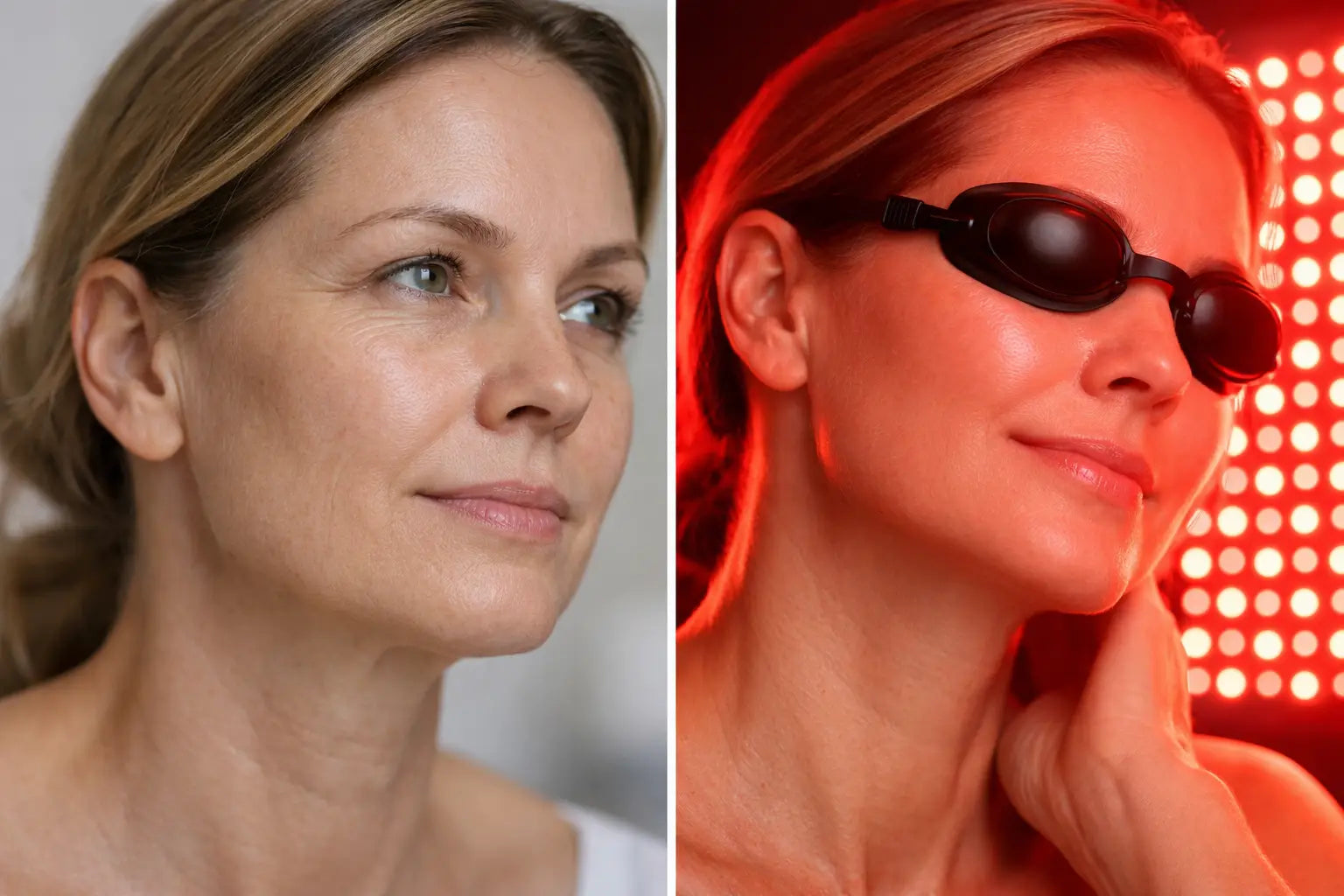
Some people expect dramatic red light therapy before after results in a week. Most of the time, real progress looks a little different. Skin may look calmer before it looks tighter. Sore muscles may recover faster before you notice changes in stiffness. The best results usually come from small improvements that build with a routine you can actually keep.
That is what makes red light therapy so appealing for at-home wellness. It fits into real life. You do not need to book appointments, rearrange your schedule, or turn recovery and self-care into a project. Used consistently, it can support skin appearance, post-workout recovery, and overall daily comfort in a way that feels practical instead of complicated.
What red light therapy before after really means
When people search for before and after results, they are usually asking one thing: what can I realistically expect? That depends on why you are using it. Someone focused on beauty may look for smoother-looking skin, more even tone, and a fresher overall appearance. Someone using it after workouts may care more about muscle comfort, recovery time, and whether they feel less tight the next day.
Red light therapy is not a one-session fix. It works best as a repeat habit, much like stretching, strength training, or skin care. That can be a plus if you want something easy to use at home, but it also means patience matters. If you expect instant transformation, you may miss the steady improvements that make the routine worthwhile.
For many people, the first before and after change is not visual at all. It is consistency. Once a device is part of your morning, post-workout, or evening routine, results become easier to track because you are giving the process enough time to work.
Red light therapy before after for skin
Skin is one of the most common reasons people try red light therapy. The appeal is simple: support your beauty routine without adding something harsh or high-maintenance. Before and after skin changes often show up as a gradual shift in how your skin looks day to day.
In the early stage, people often notice that skin looks a little more refreshed or less dull. Redness may appear calmer. Texture can start to look smoother, especially when red light therapy is paired with a basic routine that already includes cleansing, hydration, and sun protection.
Over a longer stretch, before and after results may include skin that looks firmer, more even, and a bit more radiant. Fine lines may appear softer, but subtle is the key word. This is not the same as an aggressive in-office treatment, and that is part of the trade-off. At-home red light therapy is gentler, more convenient, and easier to repeat, but results tend to build more slowly.
If your goal is skin improvement, consistency usually matters more than intensity. A few regular sessions each week often do more than occasional long sessions when you remember. Good lighting in your before photos also matters. A lot of people think nothing is changing, then compare photos taken in the same place a month apart and realize their skin looks noticeably healthier.
Before and after for recovery and muscle comfort
If you train regularly, the most satisfying before and after difference may be how your body feels. Red light therapy is often used as part of a recovery routine to support muscle comfort, reduce that worn-down feeling after exercise, and help keep your body ready for the next session.
Before, you might feel heavy, tight, or slow to bounce back after strength work, runs, or long days on your feet. After several consistent uses, some people notice they feel less stiff the following day or more comfortable warming up again. That does not mean soreness disappears completely. It means recovery may feel more manageable.
This is where expectations need to stay realistic. Red light therapy is a support tool, not a free pass to skip sleep, hydration, mobility work, or smart programming. If you are overtraining, no device is going to fully cover for that. But as part of a broader routine, it can make recovery feel more complete and easier to maintain at home.
For active adults, that convenience is a big part of the value. You do not have to build your day around a clinic visit. You can finish a workout, use your device, shower, and move on with your evening.
How long does it take to see results?
This is where red light therapy before after expectations can either stay grounded or go off track. Some people notice early changes within a couple of weeks, especially with skin freshness or post-workout comfort. More visible or more meaningful changes often take several weeks of regular use.
A useful way to think about it is in phases. In the first two weeks, you may simply notice that the routine feels easy to keep up with and that your body or skin feels a little more supported. Between weeks three and six, small visual or physical changes may become easier to spot. After that, ongoing use is often what helps maintain momentum.
It also depends on the device, how often you use it, the area you are treating, and your starting point. Someone dealing with mild skin dullness may notice changes sooner than someone hoping to improve deeper lines. Someone with occasional post-workout tightness may feel a difference faster than someone with more persistent discomfort.
The smartest approach is to think in months, not days. That mindset tends to lead to better habits and better results.
What makes before and after results better
The people who get the most satisfying results usually do a few simple things well. They stay consistent, they follow device directions, and they match their expectations to their goal. They also avoid making red light therapy carry the whole load.
If you want skin benefits, keep the rest of your routine steady. If you want recovery support, pair it with hydration, movement, and enough rest. If you want a daily wellness habit you can stick with, choose a setup that fits your schedule instead of one that looks impressive but never gets used.
There is also a practical side to device choice. Larger panels may be more convenient for broader treatment areas, while smaller tools can be easier to work into a beauty routine or target specific spots. The best option is usually the one you will use consistently in your actual life.
That is where a curated wellness brand can make things easier. Best Fit & Healthy focuses on practical at-home tools that support recovery, movement, beauty, and everyday wellness, which makes it easier to build a routine that feels connected instead of pieced together.
What can get in the way of results
Not every before and after story is impressive, and there are a few common reasons. The biggest one is inconsistency. Using red light therapy once in a while and expecting dramatic change usually leads to disappointment.
Another issue is poor tracking. If you do not take before photos, keep a loose schedule, or pay attention to how your body feels across a few weeks, it is easy to miss progress. Small improvements can be real even when they are not obvious day to day.
There is also the issue of expecting the wrong outcome. If your goal is dramatic correction overnight, at-home devices may feel too gradual. If your goal is a practical wellness tool that supports smoother skin, easier recovery, and a more polished daily routine, the experience tends to match up much better.
Is red light therapy worth it?
For many people, yes, especially if you value convenience and want wellness tools that work at home. The strongest case for red light therapy is not that it changes everything at once. It is that it can support better skin, better recovery, and better consistency without making your schedule harder.
That makes it a strong fit for people who want to move better, recover faster, and feel stronger every day. The before and after difference is often less about one dramatic reveal and more about looking in the mirror or finishing a workout and realizing things are getting easier, smoother, and more supported.
If you decide to try it, give it enough time to be honest with yourself. Take a before photo. Notice how your skin looks in natural light. Pay attention to how your body feels the day after training. The most useful results are usually the ones that make your routine feel better to live with, not just better to photograph.
A good wellness habit does not need to be flashy to be worth keeping.
Share:
7 Benefits of Red Light Therapy
Best At Home Recovery Tools for Daily Use